Ask people who fish the Pacific coast of Costa Rica which fish they would most like to see on the end of their line, and the roosterfish comes up again and again. It is not the biggest fish in the ocean, and it is not prized for the table. It is the look and the fight: a tall comb of spines standing up near the surface, then a run that makes the reel scream.
Quick facts
| Common name | Roosterfish (pez gallo in Spanish) |
|---|---|
| Scientific name | Nematistius pectoralis |
| Family | Nematistiidae, with this fish as its only living species |
| Range | Eastern Pacific only, roughly from Baja California to Peru |
| Habitat | Shallow coastal water: sandy beaches, the surf zone, rocky points |
| Diet | Smaller fish that swim near the coast |
| Size | Often a few kilos; large adults can grow longer than a meter |
The comb that gives it its name
The name comes from the first dorsal fin: a row of very long, thin spines, usually seven, that the fish can raise into a crest like the comb on a rooster’s head. When the fish is calm, the crest folds down into a groove along its back and almost disappears. When it is excited, hunting or hooked, the spines stand up and sometimes cut through the surface. The body is silvery gray with dark, curving stripes, and the profile is deep and muscular, built for short bursts of speed.
It is also a curiosity for biologists. The roosterfish is the only living member of its family, so nothing else in the sea looks quite like it.
Where it lives
The roosterfish is found only in the eastern Pacific, so you will not meet it on the Caribbean side of Costa Rica. It prefers water close to land: along sandy beaches, in the zone where the waves break and around rocky points and small islands. Young fish can turn up in very shallow water near the shore. That coastal habit is part of its appeal, because you do not need to travel far offshore to look for one.
How it is fished
In general, roosterfish are caught with live bait, small fish pulled slowly or drifted near the coast, or with lures that imitate a fleeing baitfish. Some anglers cast from the beach or from rocks, but most fish for them from a boat working along the shoreline. The bite can be a tease: a roosterfish may follow a bait for a while, crest up, before it commits. Once hooked, expect strong, fast runs and a long tug of war. For a beginner, it is a fish you remember.
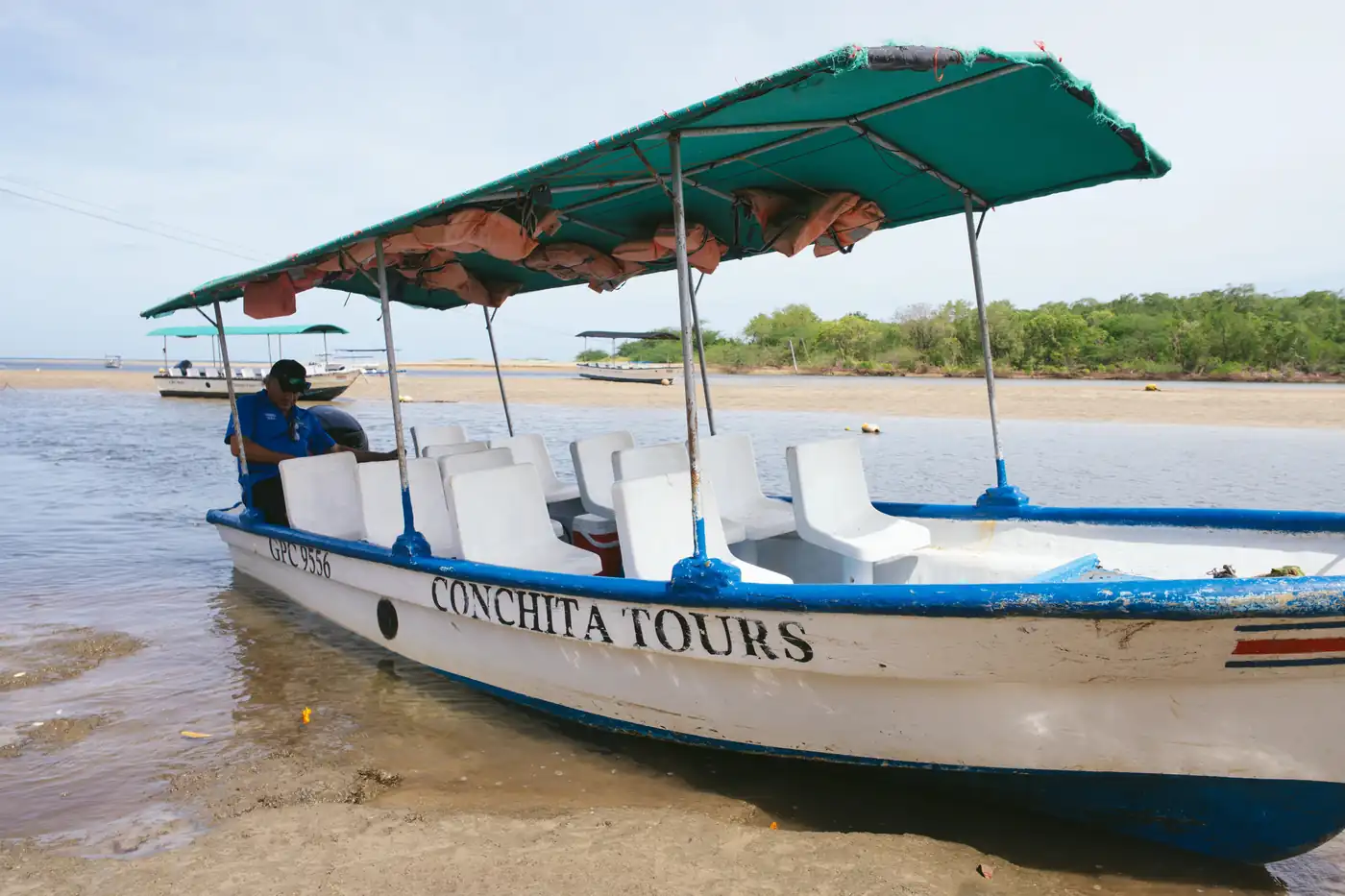
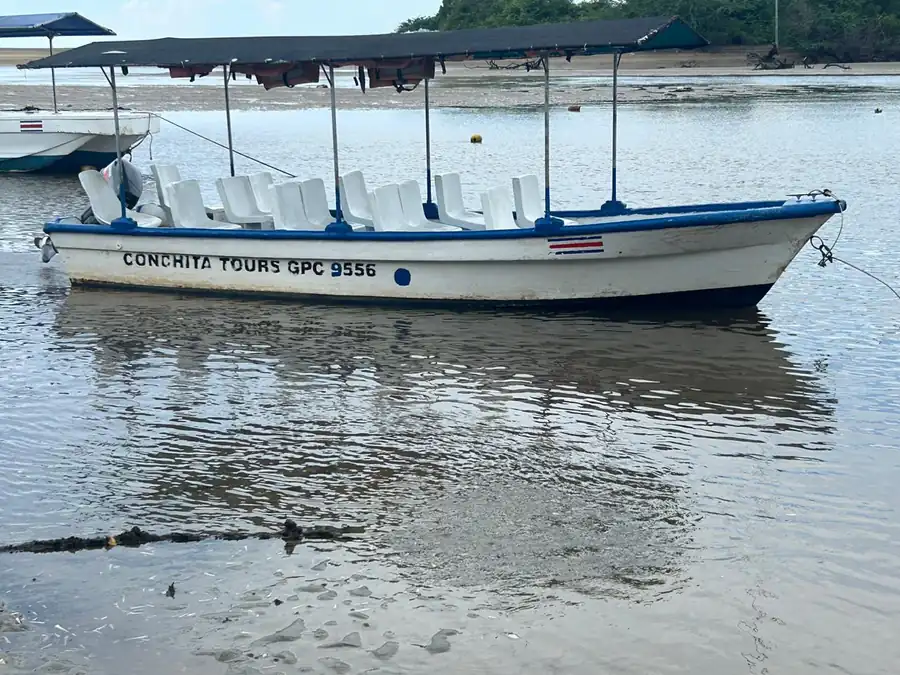
On a half-day trip off Tamarindo, the crew decides what to target according to the season and the conditions. Roosterfish are one of the species found in these waters, along with snapper, mahi-mahi, grouper and tuna, but no species is guaranteed on a given day. Read sport fishing in Tamarindo for first-timers to see how the trip works.
How to release it well
Most anglers let roosterfish go, and a good release is what lets the fish swim away strong. The crew will lead the process, and it helps to know what they are doing and why:
- Keep it in the water as much as possible. Every second in the air counts.
- Wet your hands before touching it. Dry hands strip the protective slime from its skin.
- Support the body horizontally, one hand under the belly and one near the tail. Never hold it by the gills and never squeeze.
- Mind the spines. The crest and fins can poke; let the crew deal with the hook.
- Take photos fast, with the fish low and close to the water. Have the camera ready before the fish comes up.
- Revive it by holding it in the water and moving it gently forward so water runs over the gills, until it kicks free on its own.
Rules and responsible fishing
Fishing in Costa Rica is regulated by INCOPESCA, the national fisheries and aquaculture institute. Rules can change, so ask us what applies to your trip when you book. Releasing the fish you do not plan to eat, using gear that hooks cleanly and keeping handling short are simple ways to help keep roosterfish common along this coast.
From the open sea to the mangrove
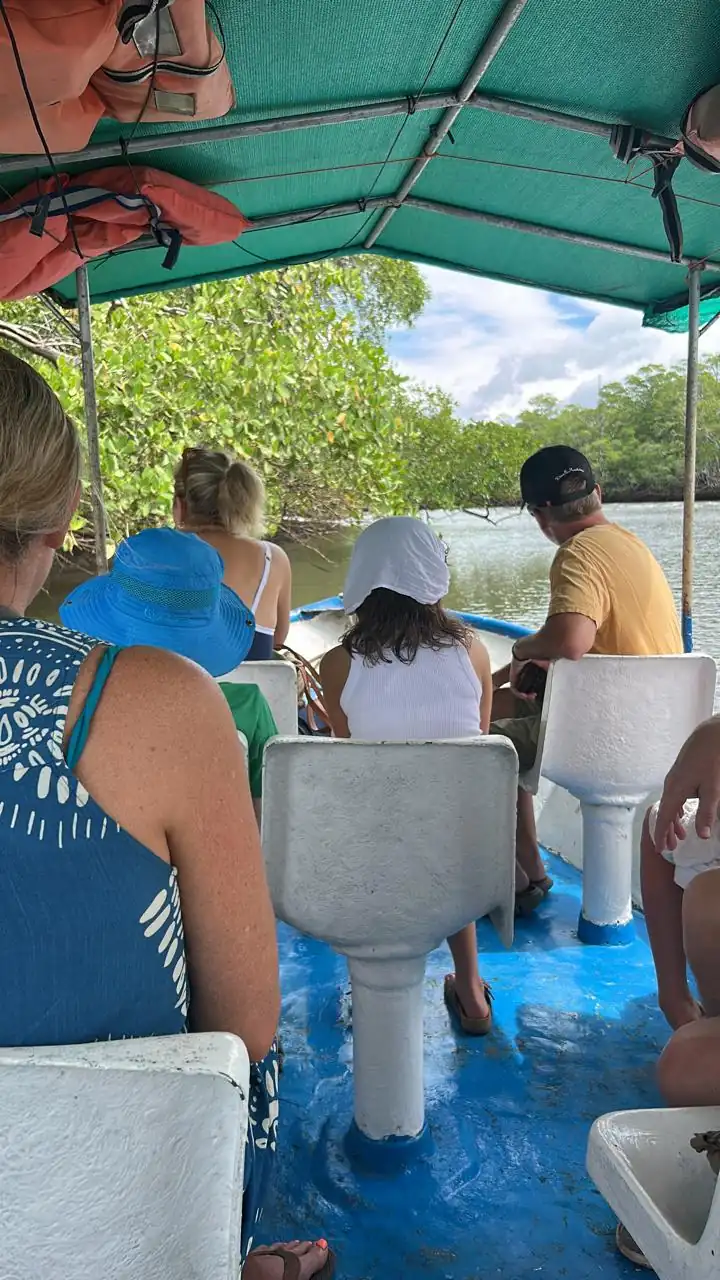
The coastal food web that feeds the roosterfish has roots in places like the Tamarindo Estuary. Mangroves shelter many of the small fish that later move out along the coast, and on the estuary tour you can watch kingfishers and herons hunting that same abundance. If you are fishing with us, consider a calm day in the channels too: the estuary boat tour lasts about two hours and suits all ages, and the kayak tour takes you to the mangrove roots at water level. If the open sea makes you nervous, read will I get seasick on a Tamarindo boat tour? first.
Want to try for a roosterfish? See the half-day sport fishing trip, then book or ask us about dates.
Updated November 10, 2026 · Written with the Conchita Tours guides.
Questions
Why is it called a roosterfish?
Because of its first dorsal fin, a row of very long spines that it raises into a crest that looks like the comb on a rooster’s head.
Can you eat roosterfish?
It is edible, but it is not prized for the table and most sport anglers release it. If you want to keep a fish, ask the crew what is allowed and sensible that day.
Where can you catch roosterfish in Costa Rica?
Along the Pacific coast, close to sandy beaches, surf and rocky points. The species lives only in the eastern Pacific, so it is not found on the Caribbean side.
Is a roosterfish guaranteed on a half-day trip off Tamarindo?
No. It is one of the species found off Tamarindo, but which fish are around depends on the season and the conditions of the day.
How big do roosterfish get?
Many weigh a few kilos, and large adults can grow longer than a meter.