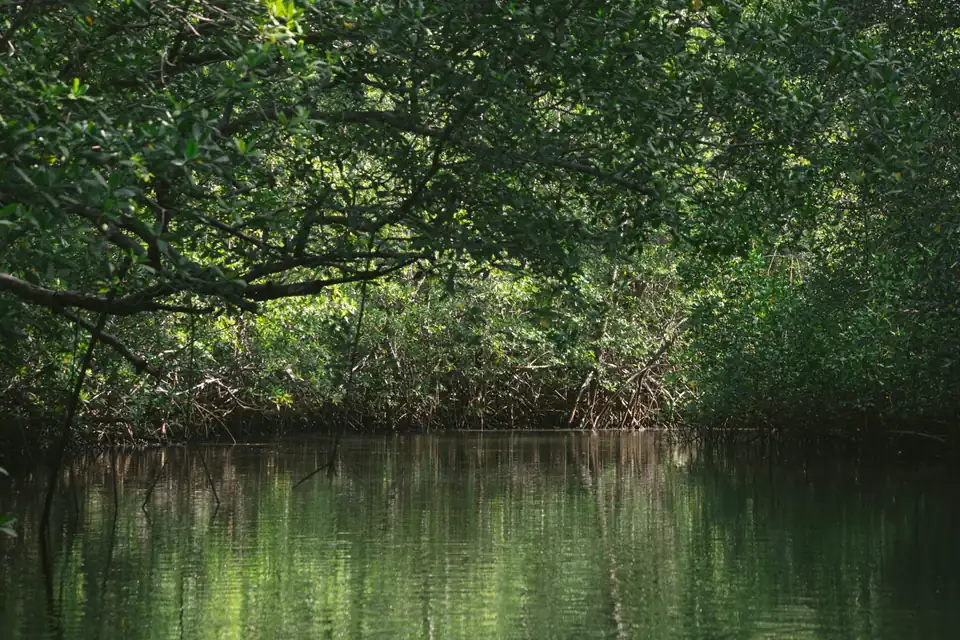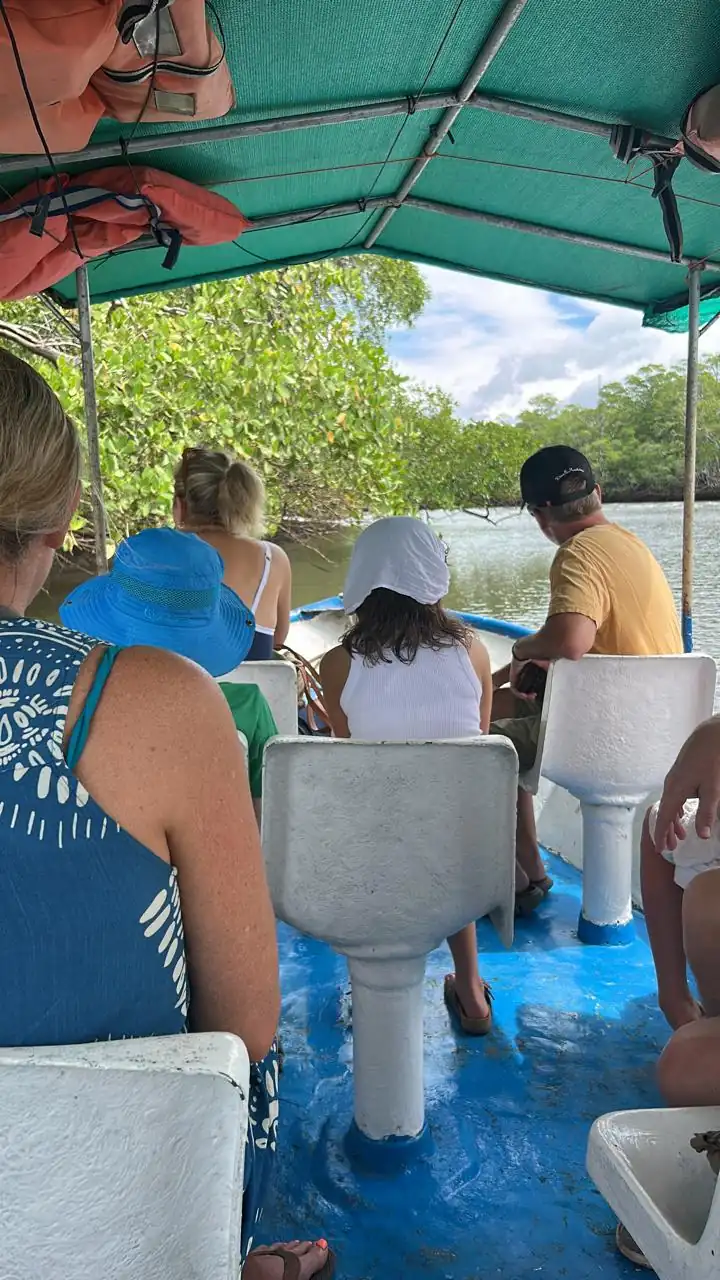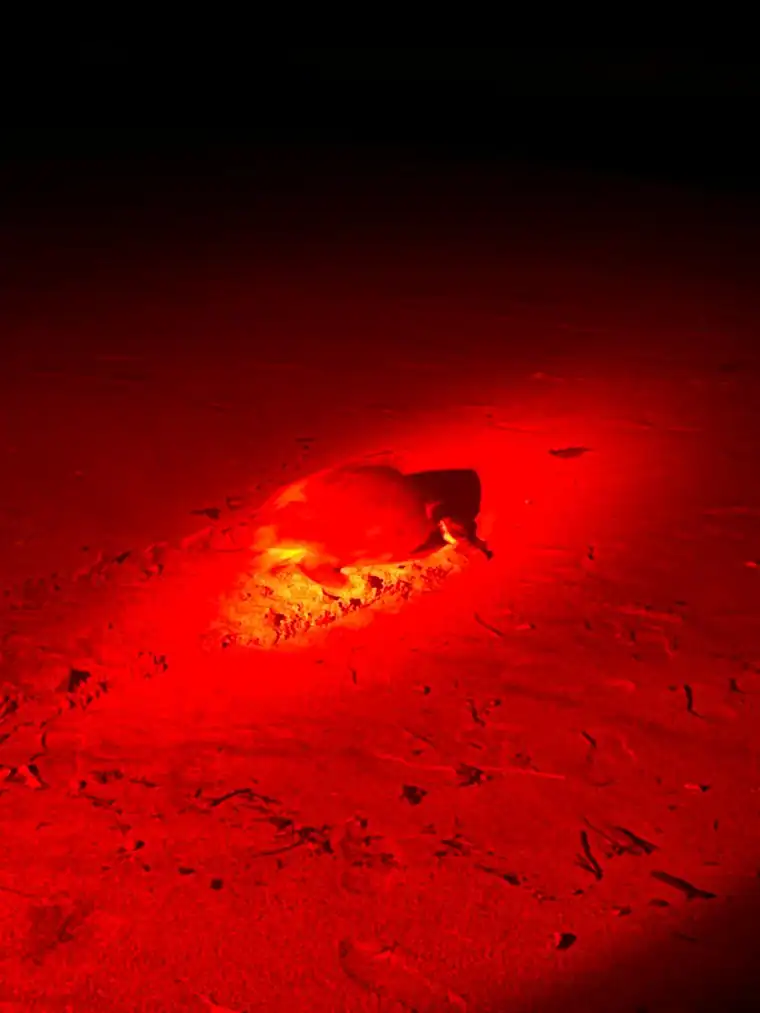
The Tamarindo Estuary is the river mouth that meets the Pacific between the town of Tamarindo and Playa Grande. Its mangrove forest is a nursery for fish, a shelter for birds and a home for reptiles and mammals. These are the animals our guides point out most often. All the photos on this page were taken on Conchita Tours trips.
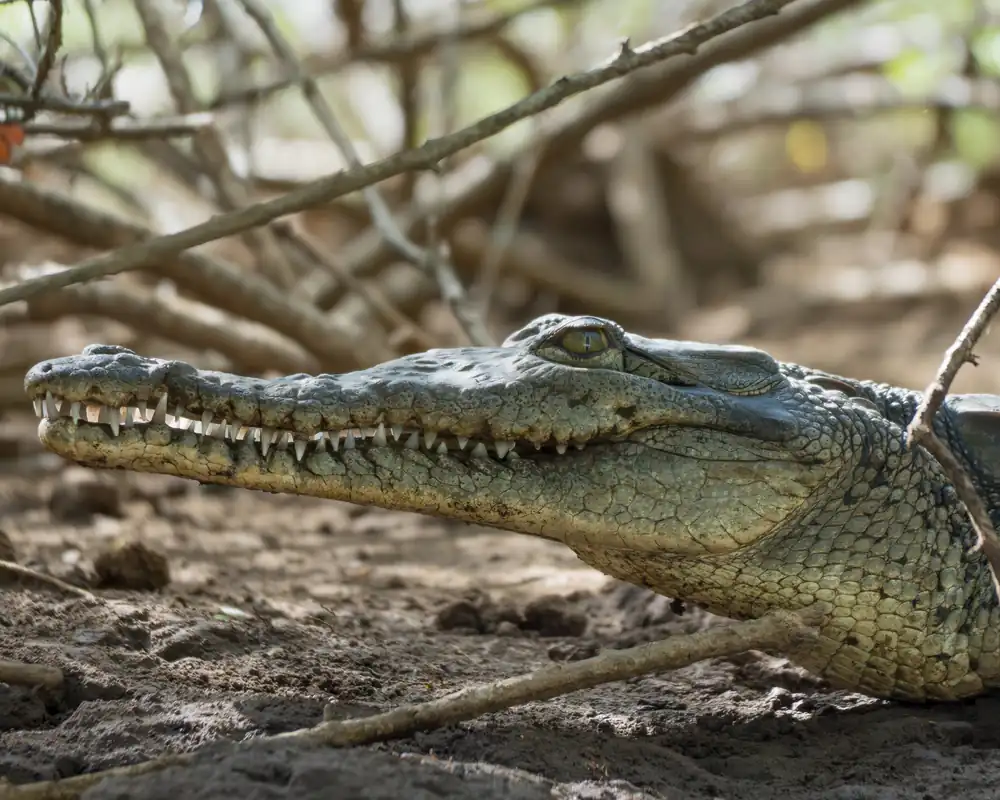
American crocodile
The estuary's most famous resident. American crocodiles rest on the mud banks and in the shallow water along the channels, often with their mouths open to cool down. They are shy around boats and are watched from a safe distance. On most trips you see at least one, but they are wild animals and no sighting is guaranteed. Read more in our guide to crocodiles in the Tamarindo Estuary.
Howler monkeys
You usually hear them before you see them: the deep roar of the howler monkey carries far across the mangroves, especially in the morning. They rest high in the trees along the channels and feed on leaves.
Herons, ibises and other birds
The estuary is a paradise for birdwatchers. Look for the boat-billed heron, a shy bird with huge eyes and a wide bill that hides in the shade of the mangroves; the night heron, a patient hunter of the channel edges; bright white ibises; small green herons on the roots; kingfishers diving for fish; and the common black hawk, a raptor that hunts the crabs of the mangrove.
Iguanas and crabs
Green iguanas sunbathe on branches and roots, sometimes right above the boat. The trunks are covered with small, colorful mangrove crabs, which are food for many of the birds on this list.
Surprises
Sharp-eyed guides also spot raccoons in the branches, tamanduas (a small tree-climbing anteater) and birds on their nests. Every trip is different.
Tips to see more
- Be quiet. Animals move away from noise. Ask before calling or whistling at any animal: our guides will tell you not to.
- Bring binoculars or a camera with zoom. Many birds stay deep in the mangrove.
- Ask your guide. They know the regular spots and the names of the birds in English and Spanish.
- Choose the right tour. The boat tour covers more ground and suits every age; the kayak tour is silent and gets into narrow channels.
Updated November 9, 2026 · Written with the Conchita Tours guides.
Questions
Are there crocodiles in the Tamarindo Estuary?
Yes. American crocodiles live in the estuary and are seen on most tours, usually resting on the mud banks. They are watched from a safe distance.
Can you see monkeys in the Tamarindo Estuary?
Yes, howler monkeys live in the trees along the channels. You often hear them before you see them.
Is it a good place for birdwatching?
Very good: boat-billed herons, night herons, white ibises, kingfishers and hawks are common along the mangroves.