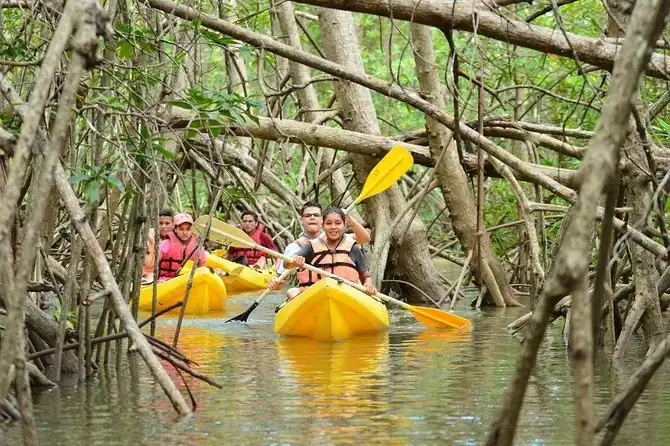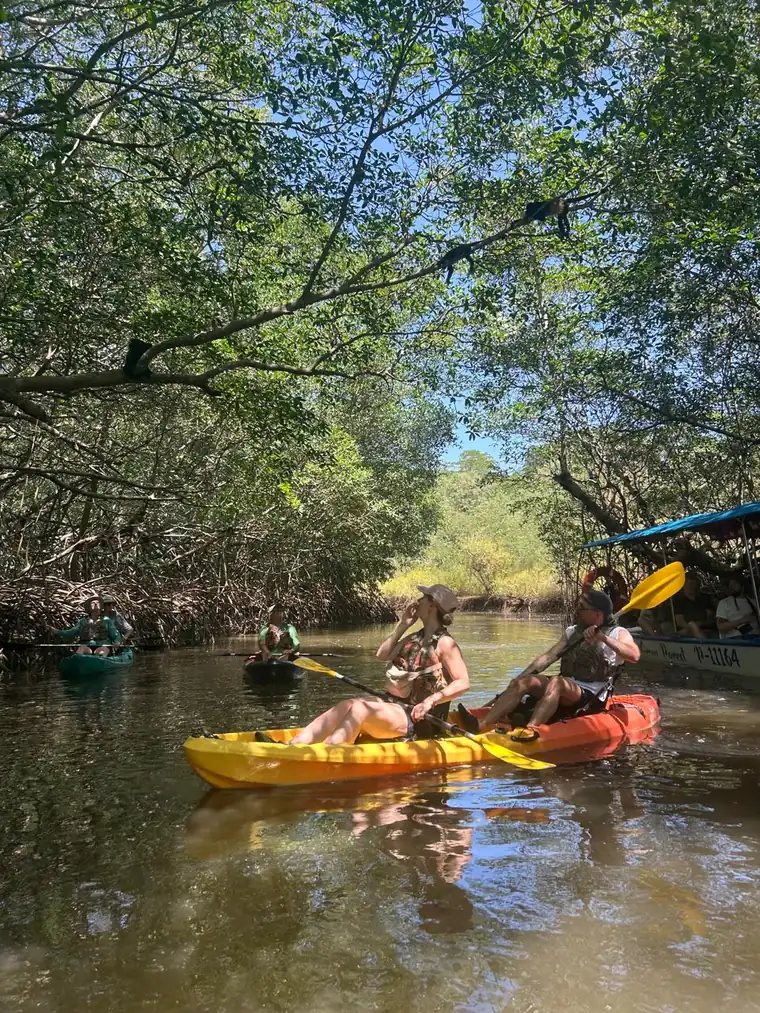
Most people show up to a kayak tour dressed for the beach or dressed for a hike. Neither is quite right. On the Tamarindo Estuary kayak tour you sit low on the water for two to three hours, under a strong sun, with the paddle dripping on your lap every few strokes. The right clothes keep you cool and protected, and they stay comfortable when they get wet. The wrong ones turn heavy, rub your skin or end up at the bottom of a channel.
This guide is only about what you wear. For the rest of the bag (repellent, water, a dry bag for your phone), see our packing list for the boat and kayak tours.
The one rule: nothing that stays wet
Cotton and denim soak up water and hold on to it. A wet cotton T-shirt sticks to your back, wet jeans weigh a ton and chafe behind the knees, and neither will be dry when the tour ends. Choose synthetic fabrics made for sport or the beach: polyester, nylon, spandex blends, or light merino if you own some. They shed water, dry in minutes in the Guanacaste sun and do not rub when you move your arms for a long time.
A quick test at home: wet a corner of the garment and wring it out. If it still feels soaked ten minutes later, save it for dinner in town.
From head to toe
Head: a hat that cannot fly away
A cap or a wide-brimmed hat protects your face and the back of your neck, which takes the sun the whole time you look ahead. The detail that matters is a chin cord or a clip. A gust or a low branch is enough to drop a loose hat into the water, and you will be holding a paddle, not chasing it. Light colors stay cooler.
Eyes: sunglasses on a strap
The glare off calm water is stronger than most people expect. Sunglasses help, and polarized lenses cut the reflection so you can see what is resting on the mud banks. Put them on a strap. The same goes for prescription glasses: if you wear them, bring a strap even if you never use one at home.
Upper body: long sleeves with sun protection
It sounds backwards in the heat, but a loose, light long-sleeve shirt with UV protection (look for a UPF rating on the label) is the most comfortable choice for paddling. Your forearms and shoulders are exposed the entire time and they burn fast. A sleeve also means less sunscreen to reapply with wet hands, and it helps a little against mosquitoes near the roots. A rash guard or a fishing-style shirt works well. The life jacket goes on top, so pick something fitted rather than a bulky layer that bunches under the straps.
Underneath: swimwear
Wear your swimsuit as the base layer. You are not going for a swim, but water drips in from the paddle and the seat may be wet when you sit down. With swimwear underneath, a damp seat is no problem at all.
Legs: quick-dry shorts or light pants
Board shorts, sport shorts or thin hiking pants that dry fast are ideal. Avoid thick seams or rivets on the back pockets, since you sit on them the whole time. Light pants protect the top of your legs, which face the sky in a kayak; if you choose shorts, put sunscreen on your thighs and knees.
Feet: a strap behind the heel
Getting in and out of a kayak can mean stepping into shallow water, wet sand or soft mud. Sports sandals with a heel strap, water shoes or old sneakers you do not mind soaking all work. Flip-flops do not: they slip off, get stuck in the mud and float away. Remember sunscreen on the tops of your feet, which point at the sun for hours.
Hands: gloves are optional
If your hands blister easily, thin paddling or cycling gloves help. Most people do fine without them on a calm-water paddle of this length.
| Body part | Good choice | Leave it behind |
|---|---|---|
| Head | Cap or wide-brimmed hat with a cord | Loose straw hat with no strap |
| Eyes | Polarized sunglasses on a strap | Favorite glasses with no strap |
| Torso | Light UV long-sleeve shirt or rash guard | Cotton T-shirt, thin white shirt |
| Base layer | Swimsuit | Cotton underwear |
| Legs | Quick-dry shorts or light pants | Jeans, heavy cargo shorts |
| Feet | Sandals with a heel strap or water shoes | Flip-flops, new white sneakers |
What not to wear
- Jewelry. Rings slide off fingers slippery with sunscreen and water, and a ring dropped in the estuary is gone for good. Leave good watches, necklaces and earrings at the hotel.
- Thin white or pale fabrics. Many turn see-through when wet.
- Anything heavy when wet: denim, sweatshirts, thick leggings, a towel around the neck.
- Long loose pieces like scarves or sarongs that can catch on the paddle or a branch.
Morning, midday or afternoon
The kayak tour can go out in the morning, at midday or in the afternoon. The exact time depends on the tide, and we confirm it by WhatsApp. Your outfit can shift a little with it:
- Morning: the gentlest light and the coolest air of the day, though mosquitoes can be more active near the roots. Long sleeves earn their place here.
- Midday: the strongest sun. Hat, sunglasses, long sleeves and sunscreen are not optional.
- Afternoon: softer heat and longer shadows. In the rainy months a shower may arrive; quick-dry clothes handle it without drama.
Dry season or green season
In the North Pacific of Costa Rica, the dry season runs roughly from December to April and the rainy, or green, season roughly from May to November, as the climate summaries of the National Meteorological Institute (IMN) describe. In the dry months the sun is intense, the air is dry and it can be windy, so the cord on your hat matters even more. In the green season it is humid and showers are frequent, often later in the day. A light rain jacket is optional: many paddlers simply get wet and stay warm, because neither the air nor the water is cold. What you avoid in both seasons is the same: cotton.
Kids and first-timers
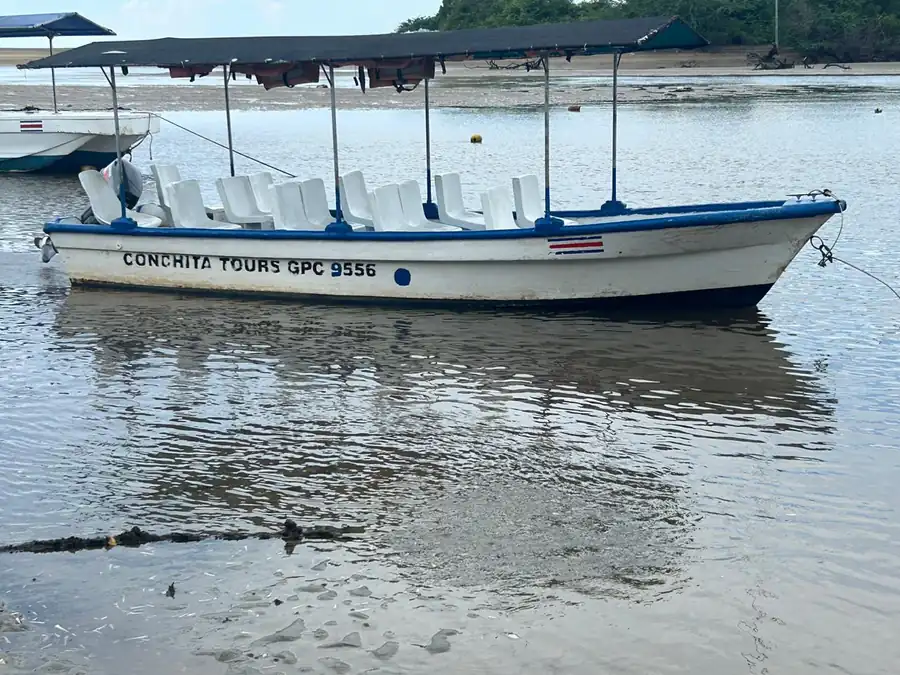
The kayak tour is for ages 8 and up. Children follow the same rules, with extra attention to the hat cord and to sunscreen on ears and the backs of the legs. If someone in your group is nervous about the water, read kayaking if you can’t swim. If the crocodiles are the worry, kayaking near crocodiles explains how the guide keeps a safe distance. And if someone would rather stay dry, the covered estuary boat tour visits the same mangroves with no paddling at all.
After the tour
Leave a dry set of clothes, a towel and a plastic bag for the wet things in your car or room. A dry shirt feels wonderful on the way back. When you are ready, book the kayak tour and pick the part of the day that suits you, or write to us if you are unsure about anything you plan to wear.
Updated November 10, 2026 · Written with the Conchita Tours guides.
Questions
Can I wear a cotton T-shirt kayaking?
You can, but it will stay wet, stick to you and feel heavy for the rest of the tour. A light synthetic or UV shirt dries in minutes and is far more comfortable.
Are flip-flops OK for the kayak tour?
Not really. They slip off and can get stuck in the mud when you get in or out of the kayak. Wear sandals with a heel strap, water shoes or old sneakers that can get wet.
Should I wear a swimsuit under my clothes?
Yes. You will not go swimming, but water drips in from the paddle and the seat may be wet, so a swimsuit as the base layer keeps you comfortable.
Do I need a rain jacket in the green season?
It is optional. The air and water are warm, so many people simply get wet and dry off later. If you bring one, make it thin and light.
Can I wear my prescription glasses?
Yes, but put them on a strap. A pair of glasses that falls into the estuary is very hard to recover.