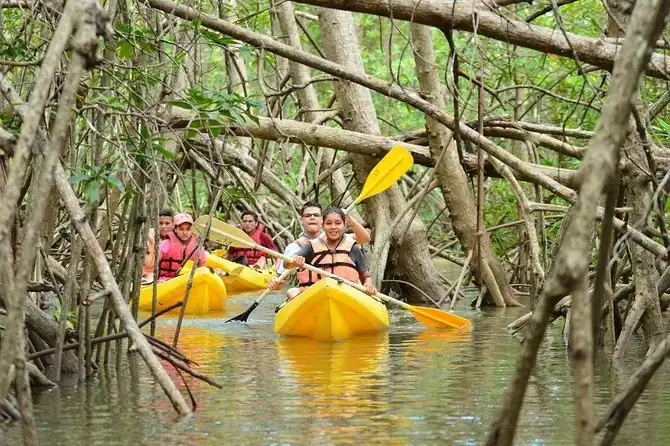
The short answer: yes, a guided kayak tour in the Tamarindo Estuary is a safe activity when the group follows the guide. Crocodiles are part of the trip, and that is exactly why the tour has a guide, a planned route and a handful of clear rules. No activity with wild animals is ever zero-risk, so this page explains what really reduces the risk, and when the boat is the smarter choice.
How American crocodiles react to kayaks
The crocodiles of the estuary are American crocodiles (Crocodylus acutus), a species that lives in rivers, mangroves and river mouths where fresh and salt water mix. Compared with some of their relatives in other parts of the world, they are known as a fairly shy species. Their usual reaction to people is to keep their distance.
- Most of the time they rest. They lie on mud banks or in shallow water to warm up, often without moving for long periods.
- The open mouth is not a threat. A crocodile resting with its jaws open is cooling off. It is a normal resting posture, not a warning.
- When disturbed, they leave. A crocodile that feels crowded usually slides into the water and sinks out of sight. That is why guides approach slowly and never cut off its way to the water.
- They hunt by ambush, near the edges. Fish, birds and other animals that come to the water's edge are their usual prey. A group of kayaks moving down the middle of the channel is not what they are looking for.
For the basics about the species and where they live in the estuary, read our guide to crocodiles in the Tamarindo Estuary.
How the guide plans the route
On the kayak tour the route is never improvised. Your guide reads the day before deciding where to paddle:
- The tide. It decides which channels have enough water and where the mud banks are exposed. With lower water, crocodiles often rest on the open banks, so the guide keeps the group in the deeper middle of the channel. With higher water there is more room to keep distance. That is also why the departure time changes every day and we confirm it by WhatsApp.
- Distance. The guide decides how close is close enough and keeps a respectful margin. If a crocodile is in a narrow channel, the group waits, takes a different branch or turns back. The animal always keeps an open way to the water.
- Order. The guide goes first, sees the bank before you do and tells the group where to paddle and where to stop. The group stays together the whole time, without anyone racing ahead.
Rules for your group
The guide will repeat these before you launch. They are simple, and they matter:
- Hands and feet inside the kayak. No trailing fingers in the water, no dangling legs.
- No splashing or banging. Do not slap the water with the paddle or hit the kayak to "wake up" an animal.
- Never feed, call or provoke. Crocodiles that link people with food become dangerous for everyone. Feeding wildlife is harmful and against the rules promoted by SINAC, the agency that manages Costa Rica's protected areas.
- Do not get out on the banks. The mud edge is crocodile territory. You stay in your kayak unless the guide says otherwise.
- Follow the guide. If the guide asks you to stop, wait, back up or move to one side, do it right away and without discussion.
- Keep your life jacket on and buckled from start to finish.
What if someone tips over?
It is not common, because the estuary water is calm, there are no waves and the guide gives a short paddling lesson before you start. Still, it is good to know the plan:
- The life jacket is mandatory and keeps you floating with your head out of the water.
- Stay calm and hold on to your kayak or paddle. Calm, steady movements are better than thrashing.
- The guide comes right away, steadies the kayak and helps you get back in, telling you each step.
If you are worried about the water itself, read can you kayak if you can't swim? It covers getting in and out of the kayak and what to tell us when you book.
Myths and realities
| Myth | Reality |
|---|---|
| Crocodiles chase kayaks. | Their usual reaction is to keep their distance or slip into the water. |
| An open mouth means it is about to attack. | It is how they cool down while resting. |
| If you cannot see one, there are none around. | Crocodiles can rest under water. That is why the rules apply the whole time, not only when one is in sight. |
| They are slow and clumsy. | They can move fast in short bursts, in the water and on land. Distance is the real protection. |
| Crocodiles only live in fresh water. | American crocodiles tolerate brackish and salt water, which is why they do well in river mouths and mangroves. |
When the boat is the better choice
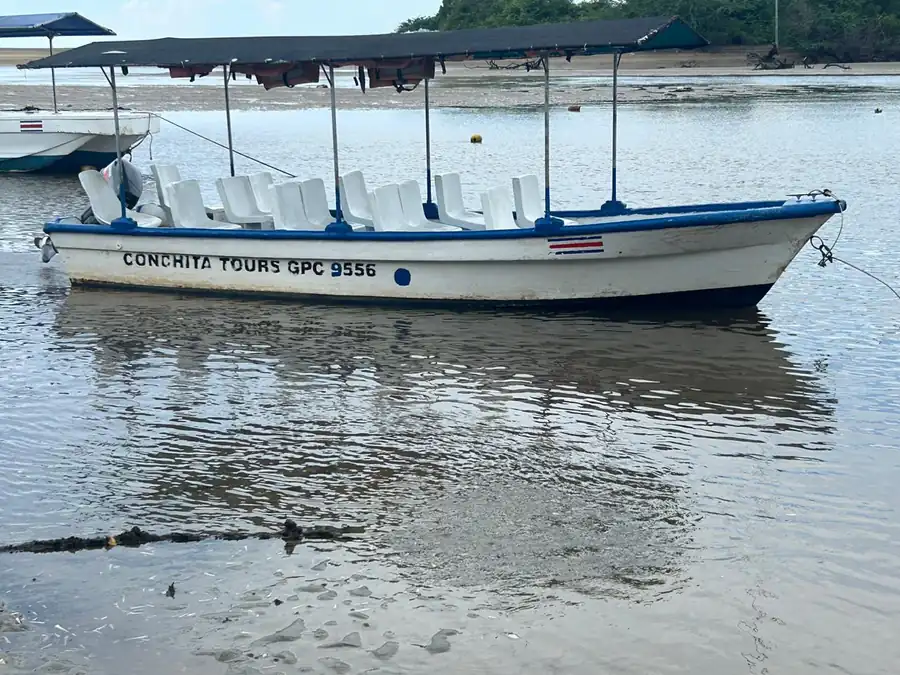
The kayak is not for everyone, and that is fine. The estuary boat tour is the better option if:
- Someone in your group is under 8 years old (the kayak minimum) or over 120 kg (the kayak maximum per person).
- Someone feels nervous being at water level near crocodiles.
- You want shade, a seat and no paddling, or someone has limited mobility.
- You want to watch and photograph crocodiles from a higher, steadier platform.
The boat tour lasts about two hours, suits all ages and costs $35 per person. The kayak tour lasts 2 to 3 hours and costs $60 per person, with the kayak, paddle, life jacket and a short lesson included. Compare both in boat or kayak in the Tamarindo Estuary.
Make the most of it
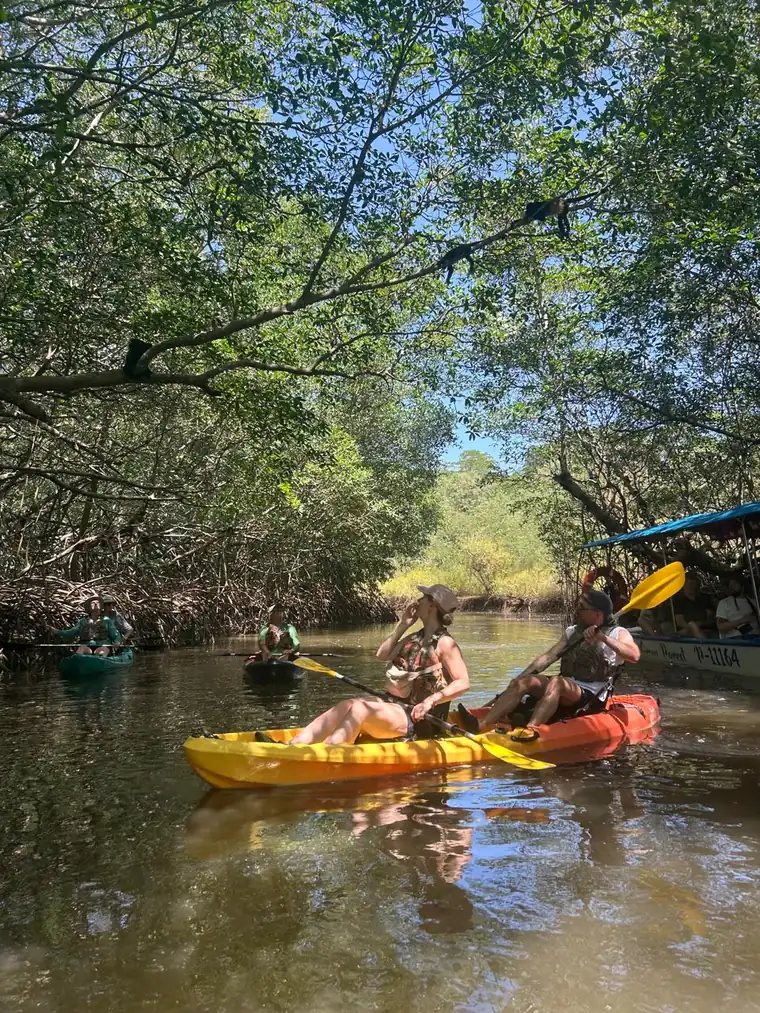
Paddling quietly also means you see more: herons in the roots, iguanas on the branches and howler monkeys overhead. Before you go, read how to spot wildlife in Costa Rica for the tricks our guides use to find a crocodile that looks exactly like a log. Ready? Book the kayak tour or ask us anything first.
Updated November 10, 2026 · Written with the Conchita Tours guides.
Questions
Is it safe to kayak with crocodiles in Tamarindo?
Yes, on a guided tour where the group follows the rules. The guide plans the route by the tide, keeps a respectful distance and keeps the group together. No activity with wild animals is zero-risk.
Do crocodiles attack kayaks in the Tamarindo Estuary?
Their usual reaction to kayaks is to keep their distance or slip into the water. The rules, such as keeping hands inside and never feeding them, exist to keep it that way.
What happens if my kayak tips over?
The water is calm, everyone wears a life jacket and the guide comes right away to help you back into the kayak. Stay calm and hold on to the kayak or paddle.
What are the age and weight limits for the kayak tour?
Minimum age 8 and maximum weight 120 kg per person. If someone does not meet them, the boat tour is suitable for all ages.
Can we get out of the kayak to take photos?
No. The muddy banks are where crocodiles rest, so everyone stays in the kayak unless the guide says otherwise.