Costa Rica is full of animals, but most of them are built not to be seen. Their colors match the bark, they stay still in the shade and they move when you are looking the other way. Guides are not born with better eyes; they simply know where to look, what to look for and when. These are the habits our guides use every day in the mangroves of the Tamarindo Estuary, and they work just as well in any forest, river or wetland in the country.
1. Scan in layers, not at random
Most people let their eyes jump from one bright spot to another. Guides sweep. Divide what you see into horizontal layers and go through them one at a time, slowly, from one side to the other and back:
- The water surface: ripples, bubbles, a pair of bumps that do not drift.
- The edge and the mud: banks, beaches of mud, fallen logs.
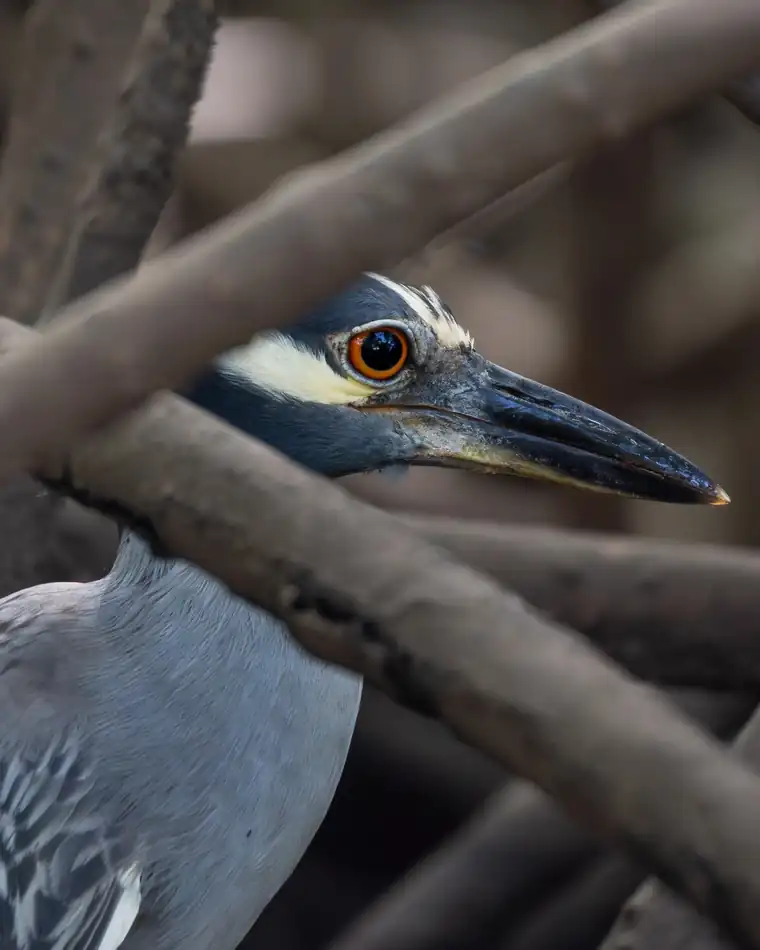
- The roots: the arched mangrove roots, where crabs climb and small herons wait.
- The middle branches: iguanas, perched birds, nests.
- The canopy and the sky: monkeys, hawks, birds flying across the channel.
Spend a few seconds on each layer before moving on. It feels slow at first, but it is how you stop missing the obvious.
2. Look for shapes and colors that don't belong
Nature is messy: tangles, broken lines, mottled light. Animals break that pattern in small ways. Train yourself to notice:
- Lines that are too regular. A crocodile resting on a bank looks like a log, until you notice the row of ridges along its back, two bumps for the eyes and a pair of nostrils at the front. Logs float with the current; a crocodile does not.
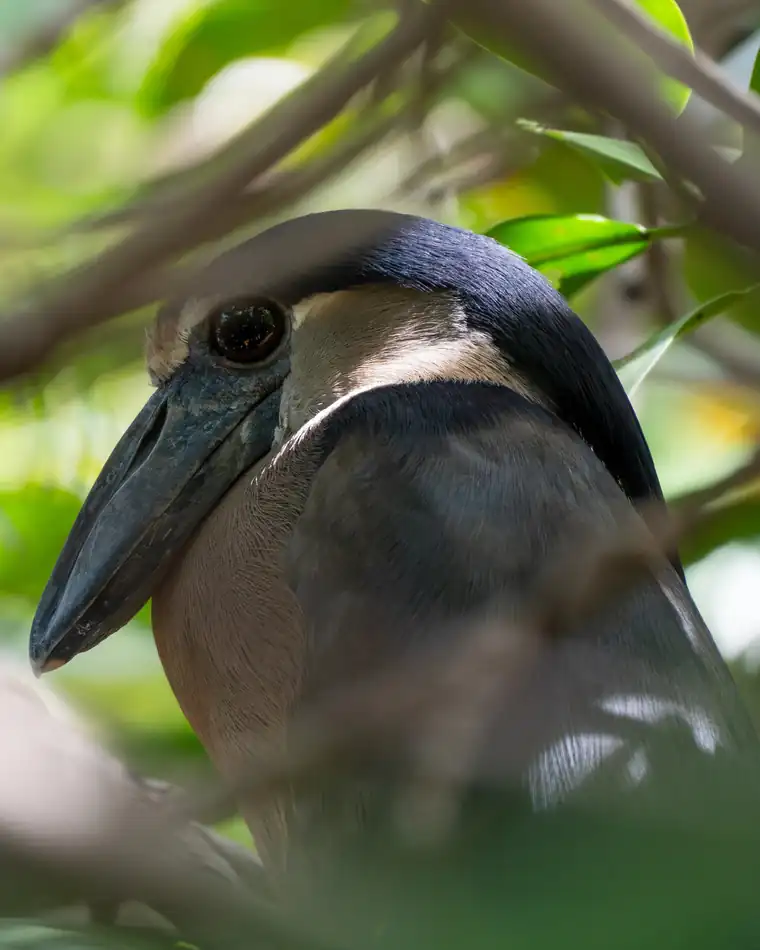
- A round lump where there should be none. A hunched, gray-brown shape deep in the shade of the roots may be a boat-billed heron. It feeds at night and spends the day resting in thick cover, so you will rarely find it in the open.
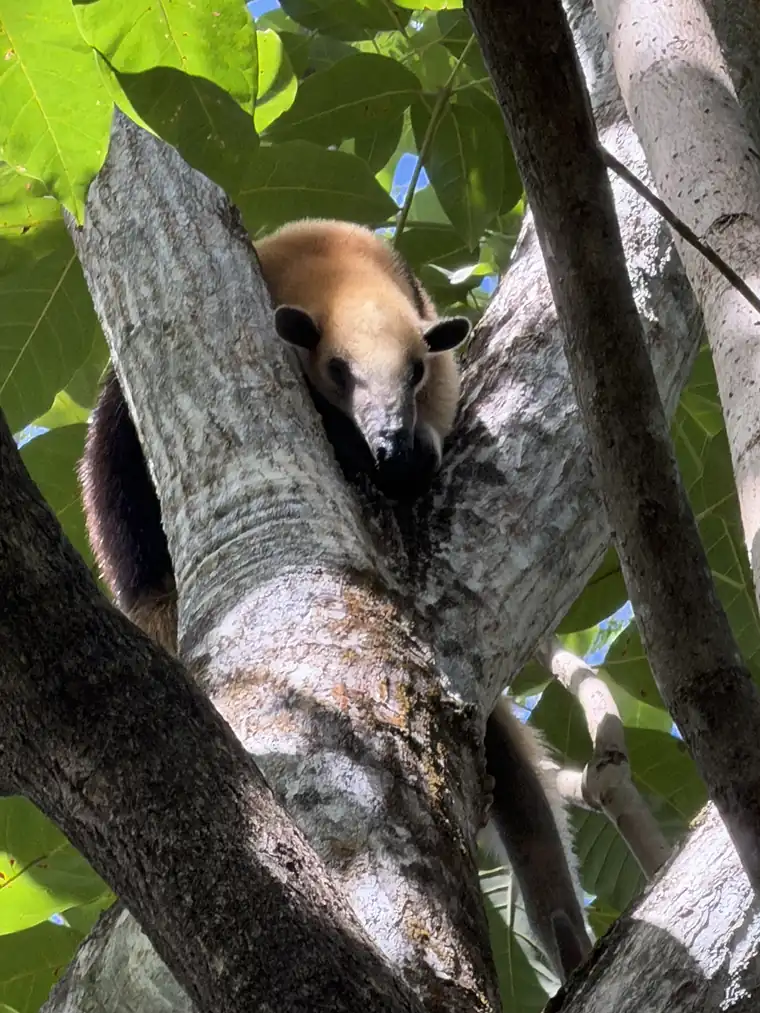
- A bump on a trunk. A golden shape with a dark "vest" pressed against a mangrove trunk can be a tamandua, the small tree-climbing anteater. Read more in our guide to the tamandua in Tamarindo.
- Colors out of place. White in a wall of green (an ibis or an egret), bright orange and red on dark bark (a mangrove crab), green that is too smooth for a leaf (an iguana).
3. Let movement find you
Your side vision is better at catching movement than your central vision. Instead of staring hard at one point, relax your eyes and take in the whole scene. Watch for a branch that shakes when there is no wind, a ripple that starts from nothing, a splash on the mud when a crab runs for its hole, or a dark shape that drops from a branch into the water, which is often an iguana. When something moves, freeze and look at that exact spot: the animal often stops too.
4. Use your ears
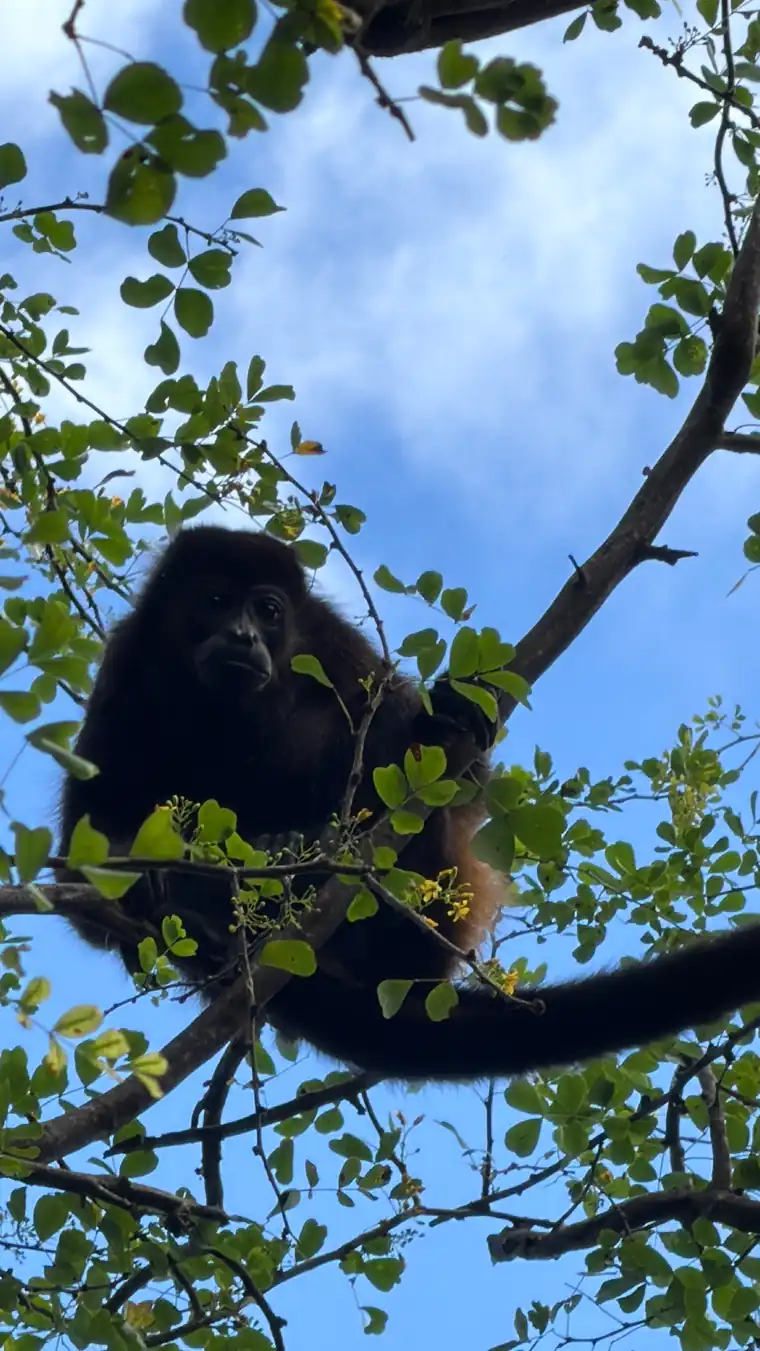
Many sightings start with a sound. The roar of a howler monkey tells you where a troop is sitting (if you are curious about that sound, read why howler monkeys howl). A sudden burst of alarm calls from small birds often means a hawk or a snake is close. A kingfisher announces itself with a dry rattle as it flies along the channel. Rustling in dry leaves on the bank can be a lizard, a raccoon or an iguana. Ask your guide to name the sounds you hear; after a while you will start to recognize them yourself.
5. Watch for the shine of an eye
A wet eye reflects light. In the deep shade under the mangrove, a tiny bright point can be the only thing that gives away a heron or a crocodile lying half under water. At night, with a flashlight held close to your own eyes, many animals' eyes glow back at you; crocodile eyes shine a reddish orange. That trick belongs to night walks in other parts of the country; on our daytime estuary tours you look for the glint in the shade instead.
6. Think like the animal: tide and heat
Animals follow the conditions, and so should your eyes:
- Lower water exposes mud banks. Crocodiles haul out to rest there, herons and ibises walk the edges looking for food, and crabs come out of their holes.
- Higher water covers the mud and lets the boat or kayak go deeper into the channels. Birds move up into the roots and branches.
- The heat of the day brings reptiles out to warm up in the sun, while birds and mammals look for shade. At midday, search the shadows for birds and the open banks for crocodiles.
- Early hours are usually busier for birds and noisier for monkeys.
Departure times follow the tide; read the best time for an estuary tour to understand why.
7. Use binoculars the right way
The most common mistake is lifting the binoculars and then searching through them. Do it the other way around:
- Adjust the width and the focus before the tour, on something far away.
- Find the animal with your naked eye first.
- Keep your eyes fixed on it and bring the binoculars up to your face without looking away.
- Only then fine-tune the focus.
To help others find what you see, use landmarks and the clock: "Two o'clock, on the dead branch above the white trunk" works much better than "over there."
8. Be quiet, be patient, blend in
- Silence pays. Talk in a low voice, turn off phone sounds and avoid sudden movements or waving arms.
- Give each spot time. When the guide stops, wait a full minute. Animals that froze when you arrived often start moving again.
- Wear neutral colors. Green, khaki, brown or gray stand out less than bright white or neon.
- Never call, whistle at or bait an animal. It changes their behavior and is against the wildlife rules promoted by SINAC, the agency in charge of Costa Rica's protected areas.
9. Kayak or boat: two ways of seeing
A kayak is silent and low on the water. Birds and monkeys often tolerate a closer approach, and you can slip into narrow channels. The trade-off is a low angle: you cannot see over a high bank. The boat gives you a higher seat to look over banks and across mud flats, covers more ground, gives you shade and makes it easier to hold binoculars steady. Neither is better at everything; they simply show the same mangrove from two angles.
Practice beyond the estuary
These tricks travel well. Sloths, for example, do not live in the estuary, but on our sloth tour in Bijagua you will look for a ball of fur that resembles a clump of leaves high in a tree, which is exactly the "lump where there should be none" from point 2. In the wetlands of Palo Verde, scanning in layers helps you sort out dozens of waterbirds at once.
Want to put all this into practice with someone who does it every day? Book your tour or write to us and we will help you pick the right one.
Updated November 10, 2026 · Written with the Conchita Tours guides.
Questions
Do I need binoculars on a wildlife tour in Costa Rica?
They are not required, but they help a lot, especially with birds and monkeys high in the trees. Find the animal with your naked eye first, then raise the binoculars without looking away.
What should I wear to see more wildlife?
Neutral colors such as green, khaki, brown or gray. Bright white and neon are easier for animals to notice.
Is it easier to see animals from a kayak or from a boat?
Each has an advantage. The kayak is silent and lets you get closer; the boat gives you a higher view, more ground covered and shade.
What is the best time of day to see wildlife?
Early hours are usually busier for birds and monkeys, and the heat of midday brings reptiles out into the sun. In the estuary, the tide also decides what you see.