Bijagua is not a resort town and it has no beach. It is a rural community of farms, small homes and patches of forest in the canton of Upala, province of Alajuela, sitting in the low pass between Tenorio Volcano and Miravalles Volcano. Travelers come for one reason: the nature around it. For anyone staying in Tamarindo, it is one of the most practical places to walk into a truly wet, green forest in a single day.
Where Bijagua is, and why it feels so different
The Guanacaste volcanic range runs like a wall between the dry Pacific lowlands and the wetter northern plains that drain toward the Caribbean. Bijagua sits on the northern, Caribbean-facing side of that wall. The trade winds push moist air up the slopes, the air cools, and the moisture falls as drizzle and rain. The result is a climate that has little in common with Tamarindo’s:
- Cooler air. Expect fresher temperatures than on the coast, especially in the morning and under the trees.
- Clouds and mist clinging to the volcanoes much of the day. A clear view of the peaks is a bonus, not a given.
- Rain in any month. The Pacific coast has a well-defined dry season; Bijagua does not really have one. Showers come and go even when Tamarindo is sunny.
The national weather service, IMN, groups this area with the northern zone rather than with the North Pacific, which tells you a lot. That steady moisture keeps the forest leafy year-round, and it is the reason the area is known for animals that are hard to find on the coast.
Why Bijagua is good for sloths and frogs
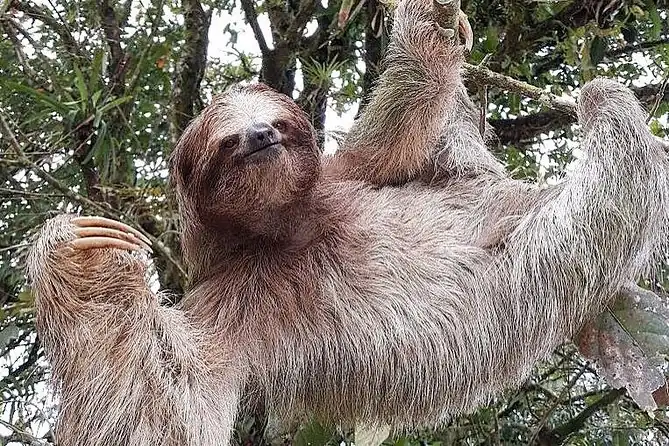
Sloths need trees with leaves to eat and a connected canopy to move through. In Bijagua, forest edges, riverbanks and the big trees left standing on farms give them both, and local guides know which trees they favor. Frogs need constant humidity, and the wet ground, streams and dense plants around town provide it. Add hummingbirds and other colorful forest birds, and a slow walk can turn up a lot in a short distance.
If you are wondering why you do not see the same animals around Tamarindo, we explain the dry-forest side of the story in are there sloths in Tamarindo?
What the day looks like from Tamarindo
Getting there is part of the experience, and it takes time. This is the usual shape of the day on our Bijagua sloth tour; the exact times are confirmed when you book.
- Morning pickup. The tour includes round-trip transport. The drive from the Tamarindo area takes approximately 2.5 to 3.5 hours each way, depending on traffic and the road.
- The road inland. You cross the flat, open cattle country of Guanacaste and then start to climb. Watch the window: the pastures give way to taller trees, and the sky often turns gray as you get close.
- Breakfast is included, so there is no need to eat before you leave.
- The walk. With a naturalist guide, you move slowly along farm trails and forest edges, stopping wherever there is something to see. Most of the time is spent looking up.
- Lunch, also included, before the trip back.
- The drive home, usually quieter than the way there. Many people doze.
The price is $220 per person for 2 or 3 people and $190 per person from 4 people, with a minimum of 2. Paying by card adds 13%.
What to bring for the rain
Pack as if it will rain, even if the sky over Tamarindo is perfectly blue when you leave.
- A light rain jacket or poncho. Umbrellas are awkward on narrow trails and when you are holding binoculars.
- Shoes with grip that can get muddy. Trail shoes or old sneakers work; flip-flops do not.
- A dry layer for the ride home: a T-shirt and socks in a plastic bag feel wonderful after a wet walk.
- Insect repellent. Humid forest means mosquitoes.
- Binoculars or a camera with zoom, and a zip bag to keep your phone dry.
- Something for the road: water, motion-sickness pills if curvy roads bother you, and headphones.
For a complete list for any long day out, see our packing list for a full-day tour in Guanacaste.
Combining Bijagua with Río Celeste
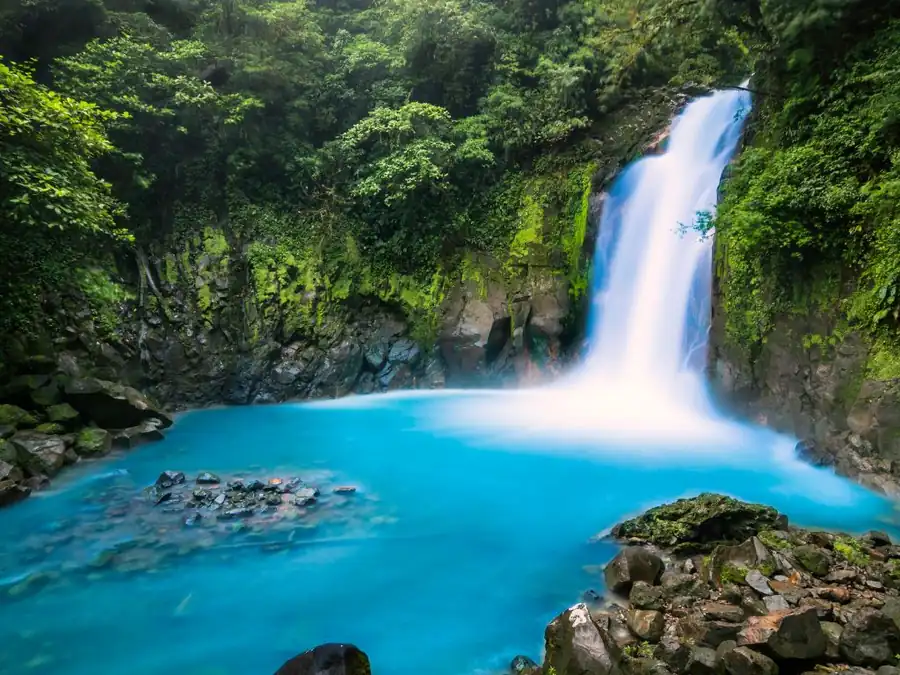
Bijagua is one of the gateways to Tenorio Volcano National Park, home of Río Celeste, the river with sky-blue water. That makes it tempting to want both. In our catalog they are two different trips: the sloth tour focuses on wildlife around Bijagua, while the Río Celeste and Tenorio Volcano hike is a guided walk inside the national park, with its price quoted on request. On the way to the park it is common to see sloths in the trees, so animal lovers often get a bonus there too.
Our suggestion: if you only have one day for this region, decide what matters more to you, more time with wildlife (the sloth tour) or the blue river and its waterfall (Río Celeste). With two free days, do both on separate days, ideally with a beach day in between. Before choosing, read why Río Celeste is blue to know what you will find on that trail. Information on the park and its rules is published by SINAC.
Balance it with an easy day on the coast
After a long drive inland, a short outing near Tamarindo is a good way to rest without staying in your room. The Tamarindo Estuary boat tour lasts about 2 hours, costs $35 per person and shows you a completely different ecosystem: mangroves, crocodiles, herons and howler monkeys. If you would rather paddle, the mangrove kayak tour is $60 per person. Write to us on the contact page with your dates and we help you put the days in order, or go straight to booking.
Updated November 10, 2026 · Written with the Conchita Tours guides.
Questions
Where is Bijagua, Costa Rica?
In the canton of Upala, province of Alajuela, in the pass between Tenorio and Miravalles volcanoes, on the northern side of the Guanacaste volcanic range.
How far is Bijagua from Tamarindo?
The drive takes approximately 2.5 to 3.5 hours each way, depending on traffic and the road. A visit from Tamarindo is a full-day trip.
Does it rain a lot in Bijagua?
Yes. Bijagua gets moisture from the Caribbean side and it can rain in any month, even when the Pacific coast is in its dry season. Bring a light rain jacket.
Can I see Bijagua and Río Celeste on the same trip?
They are separate tours in our catalog. Write to us with your dates and we tell you the best way to fit both into your vacation.
What can you see in Bijagua?
Sloths, frogs, tropical birds and green forest. Sightings are likely with a guide, but they are wild animals and nothing is guaranteed.