The northern edge of Guanacaste is lined with volcanoes, part of the Guanacaste Volcanic Range. From Tamarindo, three of them make good day trips, and they have very little in common beyond the word “volcano.” One is about adrenaline on the slopes of an active giant, one is about steam, bubbling mud and the smell of sulfur, and one is a forest hike to a river with an almost unreal color. This page puts them side by side, so you book the day that fits your group instead of the first volcano that appears in a search.
The short answer
- You want action and a packed day: Rincón de la Vieja, on one of the two adventure combos.
- You want to see, hear and smell volcanic activity: Miravalles and the fumaroles of Las Hornillas.
- You want a nature hike and the most photographed water in the country: Tenorio and Río Celeste.
The three volcano days side by side
| Rincón de la Vieja | Miravalles | Tenorio | |
|---|---|---|---|
| What you do | Adventure activities on the volcano’s foothills | Walk among fumaroles and mud pots, then waterfalls and mud | Guided rainforest hike to Río Celeste |
| Effort | Active: a long day of activities | Easy to moderate walking | Moderate: slopes, steps and often mud |
| Best for | Active couples, friends, teens | Curious travelers, families, photographers | Hikers, nature lovers, photographers |
| Included (per our catalog) | Cañón de la Vieja: canopy, tubing, rafting, horseback riding, volcanic mud baths and lunch. Guachipelín: canopy, horseback riding, tubing and natural hot springs | Visit to the fumaroles, waterfalls and thermal mud baths | Guided hike in the national park |
| Price | Cañón de la Vieja $220 per person; Guachipelín on request | On request | On request |
Rincón de la Vieja: adventure on an active volcano
Rincón de la Vieja is the closest of the three to Tamarindo and the most restless. It is an active volcano that has small eruptions from time to time, and for that reason its crater is not open to visitors. The rules of the national park, including which trails are open on any given day, are set by SINAC, the national system of conservation areas, and they can change with the volcano’s activity. So be clear about one thing before you book: on a Rincón de la Vieja day you will not look into a crater or see lava.
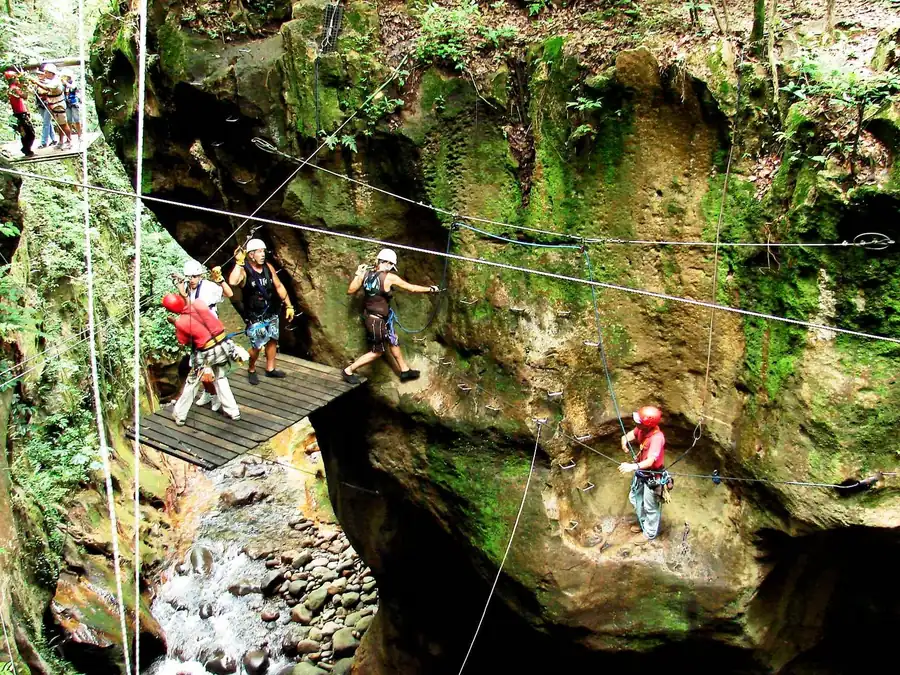
What you do is enjoy everything the volcano creates around it: deep river canyons, forest, warm water and mineral-rich mud. Conchita offers two ways to spend that day. The Cañón de la Vieja combo ($220 per person) packs canopy, tubing, rafting, horseback riding, volcanic mud baths and lunch into one outing. The Guachipelín combo (price on request) includes canopy, horseback riding, tubing and natural hot springs. If you are torn between them, we compare both in detail in Cañón de la Vieja vs Guachipelín. If the river part is what makes you hesitate, read rafting and tubing near Tamarindo first.
Pick it if your group likes to move all day and wants several activities in one booking. Think twice if someone in the group wants a slow day, or if you travel with young children: each activity has its own minimum age, so ask us before you decide.
Miravalles: the volcano you can feel
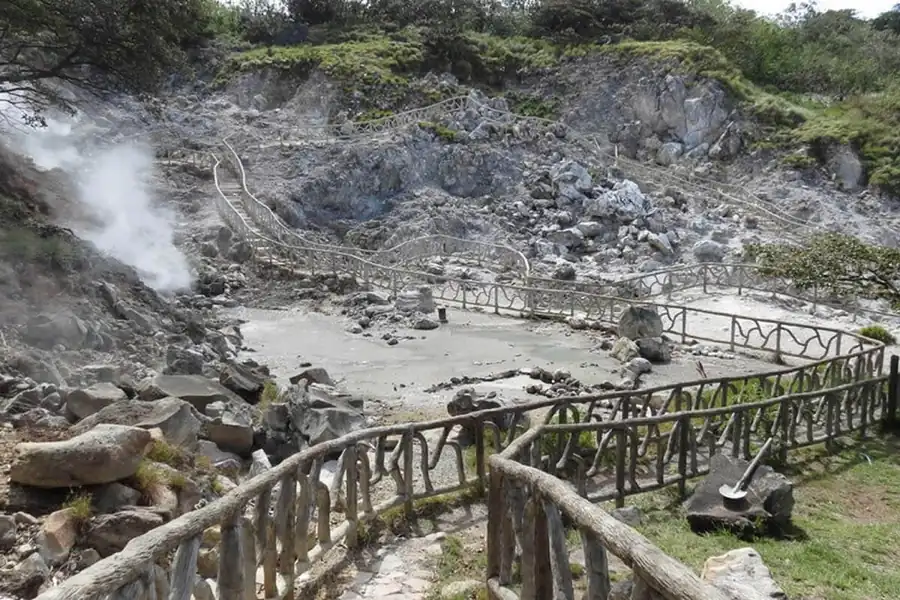
Miravalles is the tallest volcano in Guanacaste. It has no recent eruptions, but its heat still escapes through the ground. Las Hornillas, on its slopes, is a geothermal area where steam rises from cracks in the earth, gray mud bubbles in small pools and the air carries the smell of sulfur. The heat underground in this region is steady enough that it is also used to produce geothermal electricity, which tells you how close to the surface it is.
The Miravalles and Las Hornillas day includes the visit to the fumaroles, waterfalls and thermal mud baths. It is the volcano day with the most “wow” for the least physical effort: most of it is walking at a calm pace, with some uneven ground and steps. Stay on the marked path and follow your guide, because the ground near the vents can be extremely hot. If the mud bath is the part that attracts you, our guide to hot springs and mud baths near Tamarindo explains how they work.
Pick it if you are curious about how volcanoes work, you want great photos or you travel with a mixed group where not everyone wants adrenaline. Price on request.
Tenorio: a hike to Río Celeste
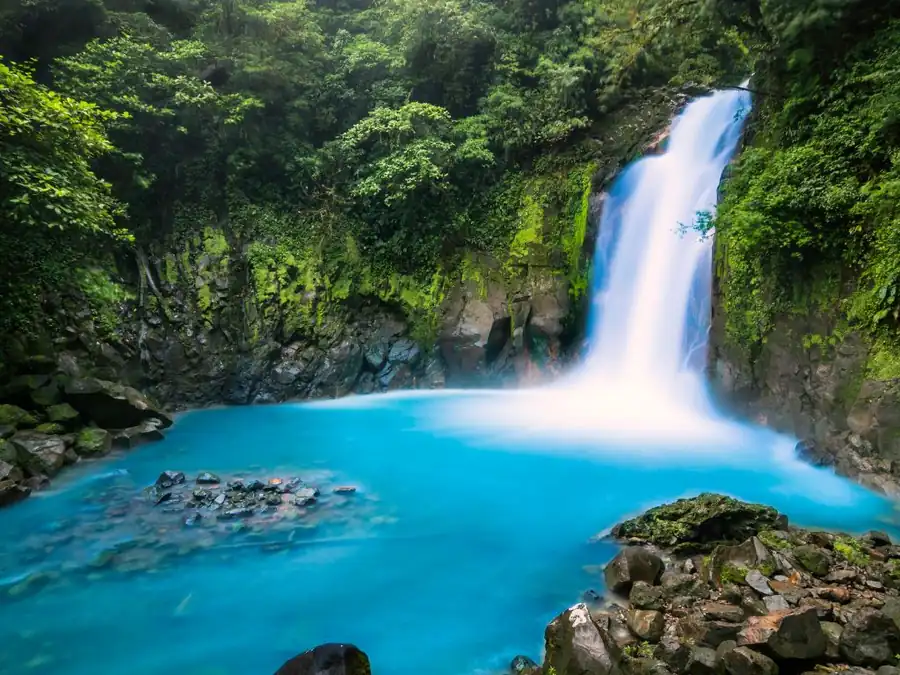
Tenorio Volcano National Park sits on the wetter side of the range, so it feels very different from the dry coast around Tamarindo: tall rainforest, moss, frequent clouds and a lot of rain. The Río Celeste and Tenorio hike is a guided walk to the waterfall, the blue pools and the spot where two streams meet and the water turns sky blue. The reason behind that color is a small chemistry lesson, which we tell in why Río Celeste is blue.
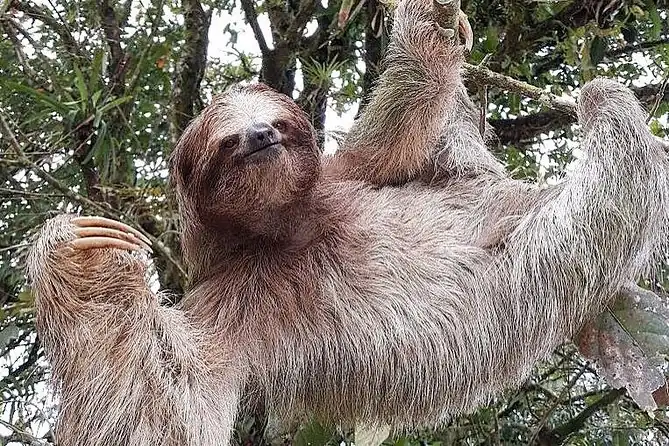
This is the most physical of the three in a walking sense. The trail has slopes and stairs, and it is often muddy, especially after rain. Swimming in the river is not allowed inside the park. On the way, sloths are often seen in the trees along the road, although, like all wildlife, they are never guaranteed.
Pick it if you enjoy hiking and want the most scenic of the three days. Bring shoes with good grip and a light rain jacket. Price on request.
How to choose for your group
- Families with young children: Miravalles is usually the gentlest. For the combos, ask us about the minimum age of each activity. For the smallest kids, a calmer plan near Tamarindo, like the estuary boat tour, works for every age.
- Teens and active friends: the Cañón de la Vieja combo, with rafting and five activities.
- Older travelers or limited mobility: Miravalles has the shortest walking, but tell us about your group first and we will advise you honestly.
- Photographers: Tenorio for the turquoise water, Miravalles for steam and texture.
- Only one day for the mountains: decide what matters most, adrenaline, volcanic activity or a hike, and pick the matching column of the table above.
Practical notes for any volcano day
All three are full days that start in the morning. Driving times from Tamarindo are roughly 1.5 to 2 hours to the Rincón de la Vieja area, about 2 to 2.5 hours to Miravalles and about 2.5 to 3 hours to Tenorio, depending on traffic and the road. Ask us about pickup when you book.
The mountains are cooler and wetter than the beach, even in the dry season. You can check general conditions for the region with the national weather service, IMN. For a complete list of what to pack, see what to bring on a full-day tour in Guanacaste.
A volcano day is long. Many travelers balance it with a calm morning on the water the day before or after: two hours on the boat tour through the mangroves, or a quiet paddle on the kayak tour. When you know which volcano you want, send us your date through the booking page. For the tours with price on request, we reply with a quote.
Updated November 10, 2026 · Written with the Conchita Tours guides.
Questions
Can you see lava or look into the crater of Rincón de la Vieja?
No. Rincón de la Vieja is an active volcano and its crater is closed to visitors. The combos take place on its foothills, and SINAC sets which trails of the national park are open.
Which volcano tour from Tamarindo is the easiest?
Miravalles and Las Hornillas, in most cases. It is mostly walking at a calm pace among the fumaroles, followed by waterfalls and mud baths.
How much does a volcano tour from Tamarindo cost?
The Cañón de la Vieja combo is $220 per person with lunch included. The Guachipelín combo, Miravalles and Río Celeste have price on request: send us your date and group size and we reply with a quote.
Can I do a volcano tour and the estuary tour on the same day?
It is not practical, because the volcano trips are full days and the estuary tour time depends on the tide. Most travelers do them on different days.
Which volcano day is best in the rainy season?
All three run in the rainy season, but expect mud and showers, especially at Tenorio. Write to us with your date and we tell you what to expect.