Río Celeste flows through the rainforest of Tenorio Volcano National Park, in northern Costa Rica, and its water looks almost unreal: a milky sky blue that seems painted on. For years people explained it in different ways, from copper to sulfur to a vague “volcanic minerals.” The clearest answer came from scientists at Costa Rica’s public universities.
The short answer: it is light, not color in the water
In 2013, a team of researchers from the University of Costa Rica and the National University sampled the water above and below the place where the color appears. Their conclusion, published in a scientific journal: the blue does not come from a dissolved substance. It is an optical effect called light scattering.
The process, step by step:
- Two clear streams meet in the forest: the Río Buenavista and the Quebrada Agria. “Agria” means sour in Spanish, and the name fits: its water is more acidic, a sign of its volcanic origin.
- The water carries tiny mineral particles, mostly aluminosilicates, compounds of aluminum, silicon and oxygen, far too small to see.
- When the two streams mix, the change in acidity makes those particles clump together and grow.
- At their new size, the particles scatter sunlight in a way that sends mostly blue light back to your eyes. The river turns sky blue from that point on.
It is a cousin of the reason the sky looks blue: tiny particles in the way of sunlight do not treat all colors equally, and blue is the one that reaches you.
The spot where all this happens is called Los Teñideros, “the dyers.” Standing there, you see two streams of ordinary-looking water flow in and one blue river flow out. It is the best place on the trail to understand the whole story with your own eyes.
The four highlights of the trail
The main trail in the park follows the river upstream. These are the stops most hikers look forward to, roughly in the order they appear:
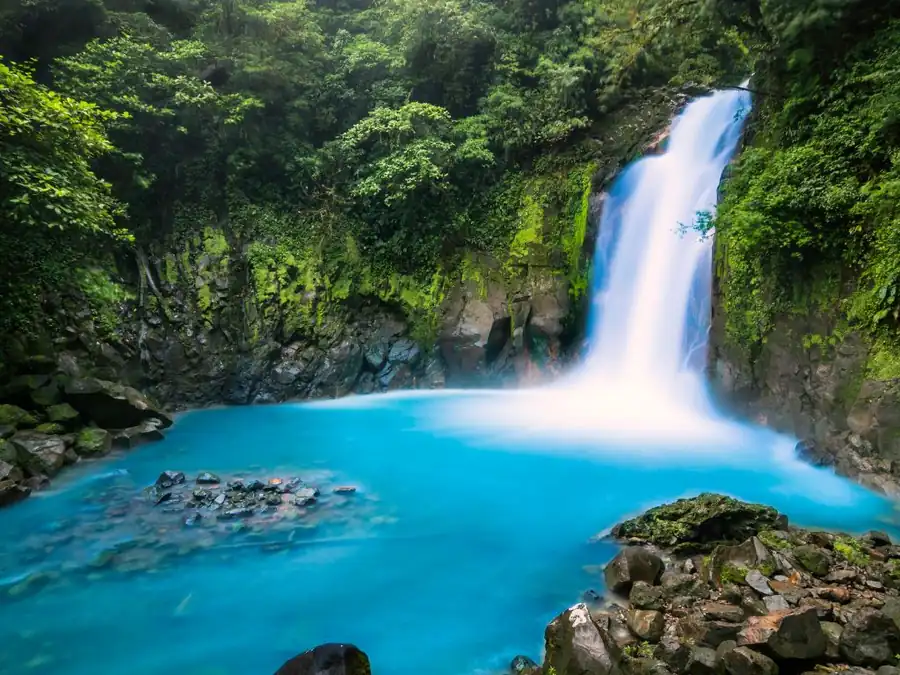
- The waterfall. A side path with many steps leads down to the turquoise waterfall that drops into a blue pool. It is the photo everyone wants, and the climb back up is the hardest part of the day.
- The blue lagoon. A calm, deep pool where the color is often at its most intense.
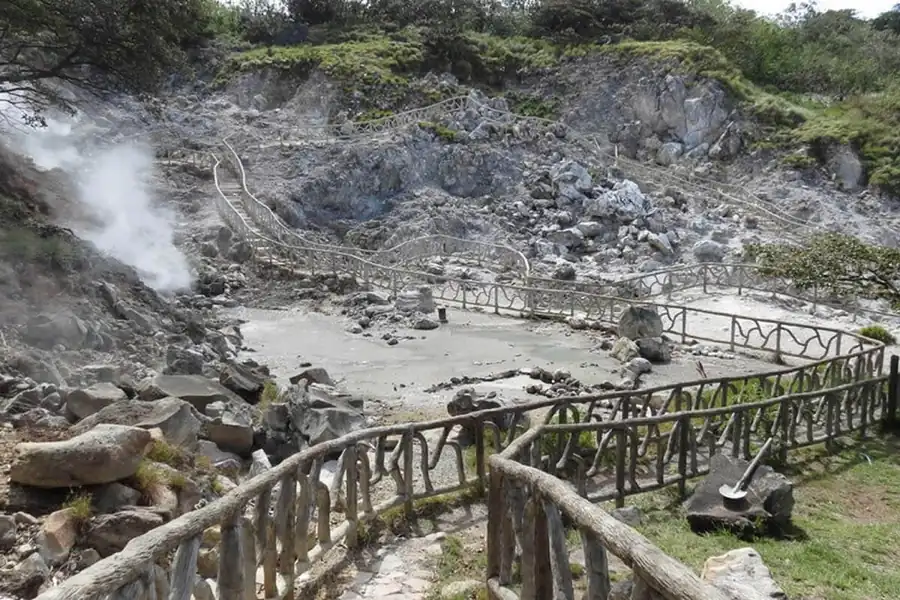
- Los Borbollones. Spots where volcanic gases bubble up through the riverbed, so the water looks like it is boiling. You may notice a smell of sulfur.
- Los Teñideros. The meeting point of the two streams, where the blue is born. It is usually where hikers turn around.
The trail has mud, roots, slopes and stairs. For most people with average fitness it is a moderate hike, but it is a forest trail, not a paved path.
Why the river is sometimes not blue
After heavy rain, the streams that feed Río Celeste carry soil and sediment washed down from the slopes. That brown, cloudy load hides the scattering effect, and the river can look gray, greenish or simply muddy. The color usually comes back after some drier days, but nobody can predict exactly when.
This side of the volcano receives moisture from the Caribbean much of the year, so there is no month that guarantees perfect color. Our advice: go for the forest, not only for the photo. Even on a cloudy-water day, the walk through the rainforest, the sound of the waterfall and the bubbling borbollones are worth it.
Park rules you should know
Tenorio Volcano National Park is managed by SINAC, Costa Rica’s national system of conservation areas. The rule that surprises visitors most: swimming is not allowed in Río Celeste, not at the waterfall and not in the lagoon. It protects the river and keeps people away from currents and slippery rocks. Also keep in mind:
- Stay on the marked trail and follow the park rangers’ instructions.
- Do not feed animals or take plants, rocks or water.
- Carry all your trash back out with you.
- Some sections can close for safety in bad weather.
What to wear and bring
- Shoes with real grip. Trail shoes or hiking boots. Many hikers wear rubber boots because the mud can get deep. Avoid sandals.
- Quick-dry clothes and a light rain jacket. Cotton stays wet for hours in this humidity.
- A change of clothes and dry socks for after the hike.
- Water and a snack, insect repellent and a waterproof bag for your phone.
Our Bijagua guide explains the rainy climate on this side of the volcanoes in more detail.
Going with Conchita Tours from Tamarindo
Our Río Celeste and Tenorio Volcano hike is a full-day trip with a guided walk inside the national park. The price depends on availability, so it is quoted on request: send us your date and group size through the booking page and we reply with the details, including what is covered and how pickup works. On the way to the park it is common to see sloths in the trees, so keep your eyes open. If sloths are your main goal, read are there sloths in Tamarindo? to compare options.
Because it is a long day, it pairs well with something short and calm near town on another day: the two-hour estuary boat tour or the mangrove kayak tour, where crocodiles, howler monkeys and herons are the stars. And if you want more volcano days, see volcano tours from Tamarindo.
Updated November 10, 2026 · Written with the Conchita Tours guides.
Questions
Why is Río Celeste blue?
Tiny aluminosilicate particles grow larger where the acidic Quebrada Agria meets the Río Buenavista. At that size they scatter sunlight so that the river looks sky blue. No dye or dissolved blue mineral is involved.
Where does the blue color start?
At Los Teñideros, inside Tenorio Volcano National Park, where two streams of ordinary-looking water meet and a blue river flows out.
Can you swim in Río Celeste?
No. Swimming is not allowed in the river inside the national park, including the waterfall and the blue lagoon.
Is Río Celeste always blue?
No. After heavy rain, sediment can make the water look murky or gray. The color usually returns after drier days, but it cannot be predicted.
How hard is the Río Celeste hike?
Moderate for most people: mud, roots, slopes and many steps down to the waterfall and back up. Wear shoes with good grip.