It is one of the first questions visitors ask when they arrive in Tamarindo: where are the sloths? Many people picture Costa Rica as one big rainforest with a sloth in every tree. Guanacaste is different. The beaches and hills around Tamarindo sit in one of the driest corners of the country, and sloths are rare here. You can spend a week in town and never see one. That is not bad luck. It is geography.
Why sloths are hard to find around Tamarindo
The forest around Tamarindo is tropical dry forest. From roughly December to April it barely rains, and many trees drop their leaves to save water. The hills turn brown and gray, the canopy opens up and the shade disappears. Then, with the first rains around May, everything turns green again in a few weeks.
That cycle works well for some animals and badly for others. Sloths eat leaves and spend almost their whole life in the treetops, moving slowly from one crown to the next. A forest that goes bare for months, broken up by pastures, roads and new construction, offers them little food and little cover. Sloths do live in parts of Guanacaste, usually in greener strips of forest along rivers, but they are scattered. And when one is there, it is very hard to spot: a sloth curled up high in a tree looks a lot like a termite nest or a clump of dead leaves.
So if someone promises you sloths on a short walk in Tamarindo, be skeptical. A sighting in town happens once in a while, but nobody can plan a vacation day around it.
Where the rainforest begins
Drive inland from the coast toward the volcanoes of the Guanacaste range and the landscape changes. On the far side of Tenorio and Miravalles volcanoes, the slopes face the humid trade winds that blow in from the Caribbean. Clouds pile up against the mountains and rain falls through most of the year. Around the small farming town of Bijagua, in the canton of Upala, the forest stays green in every season and the trees are linked by vines and branches. That is sloth country.
You can watch the change from the window: open, sunny cattle land in the lowlands, then taller trees, mist and wet roads as you climb. We describe the town, its weather and the whole day in our guide to Bijagua, Costa Rica.
How our sloth tour from Tamarindo works
Because sloths are so unreliable on the coast, our sloth watching tour in Bijagua goes to where they actually live. It is a full-day trip, and this is what it includes:
- Round-trip transport between the Tamarindo area and Bijagua.
- Breakfast and lunch.
- A naturalist guide who knows the farms and trails where sloths usually rest.
The price depends on the size of your group: $220 per person for 2 or 3 people and $190 per person from 4 people. The minimum is 2 people. Card payments carry a 13% surcharge, so mention it if you would rather pay another way.
A few honest notes before you book:
- It is a long day. The drive takes approximately 2.5 to 3.5 hours each way, depending on traffic and the road. Plan a quiet evening afterward.
- Sloths are common in Bijagua, never guaranteed. Guides find them on most days because they know where to look, but these are wild animals.
- Expect rain. Bring a light rain jacket and shoes you do not mind getting muddy.
- Binoculars help. Sloths often rest high up. Your own binoculars or a camera with a good zoom make a real difference.
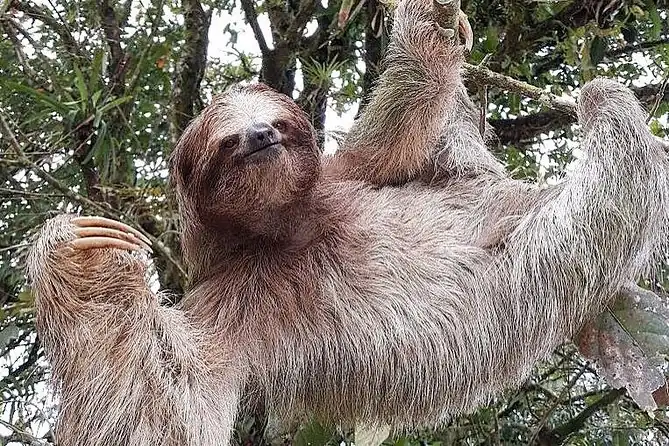
Curious about the animal itself? Your guide will tell you plenty on the trail. We only add one line here: Costa Rica has two-toed and three-toed sloths, and both move slowly because their leafy diet gives them very little energy.
What you see in the estuary instead
Back in Tamarindo, the best wildlife outing is right at the edge of town. The Tamarindo Estuary is a mangrove forest where the river meets the sea, and its animals are a completely different cast from the rainy forest of Bijagua. Sloths are not part of it, but there is plenty to look at:
- American crocodiles resting on the mud banks.
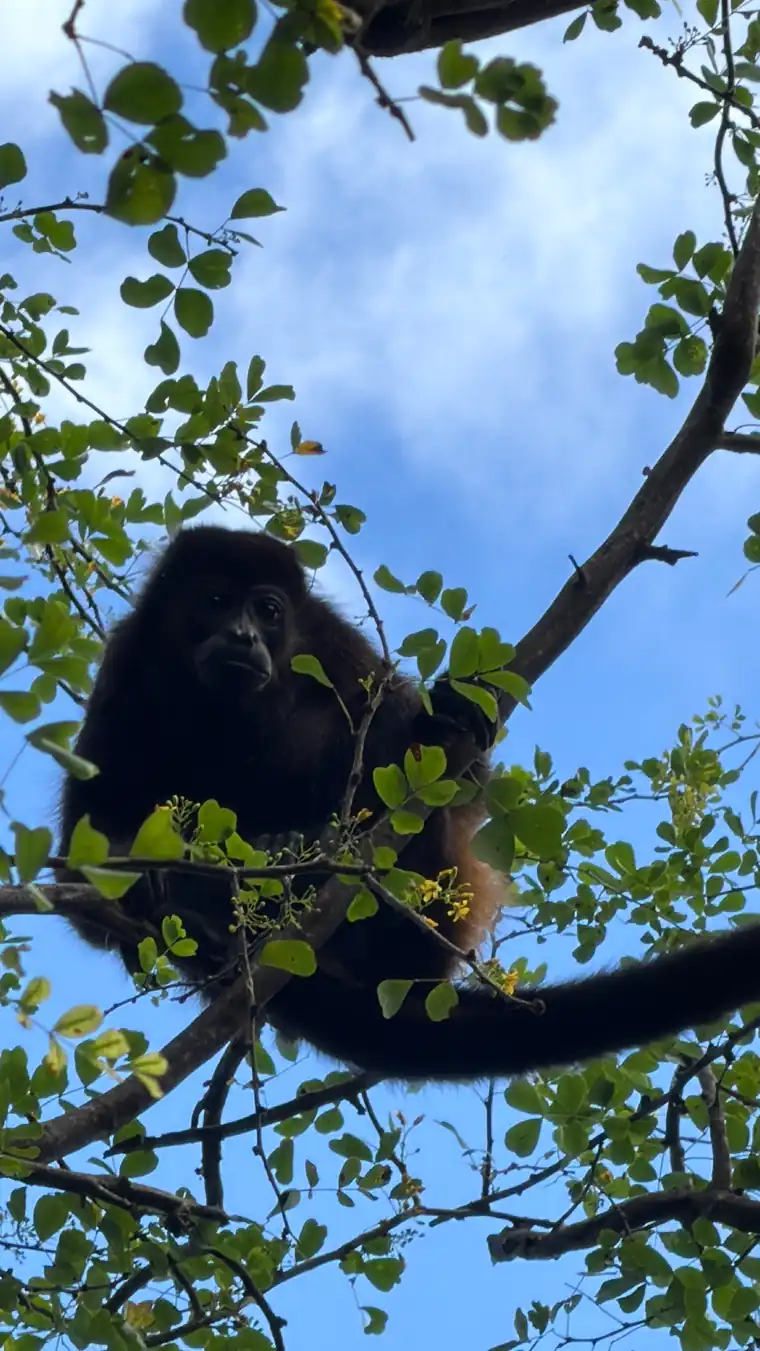
- Howler monkeys, which you usually hear long before you see them.
- Green iguanas sunbathing on branches and roots.
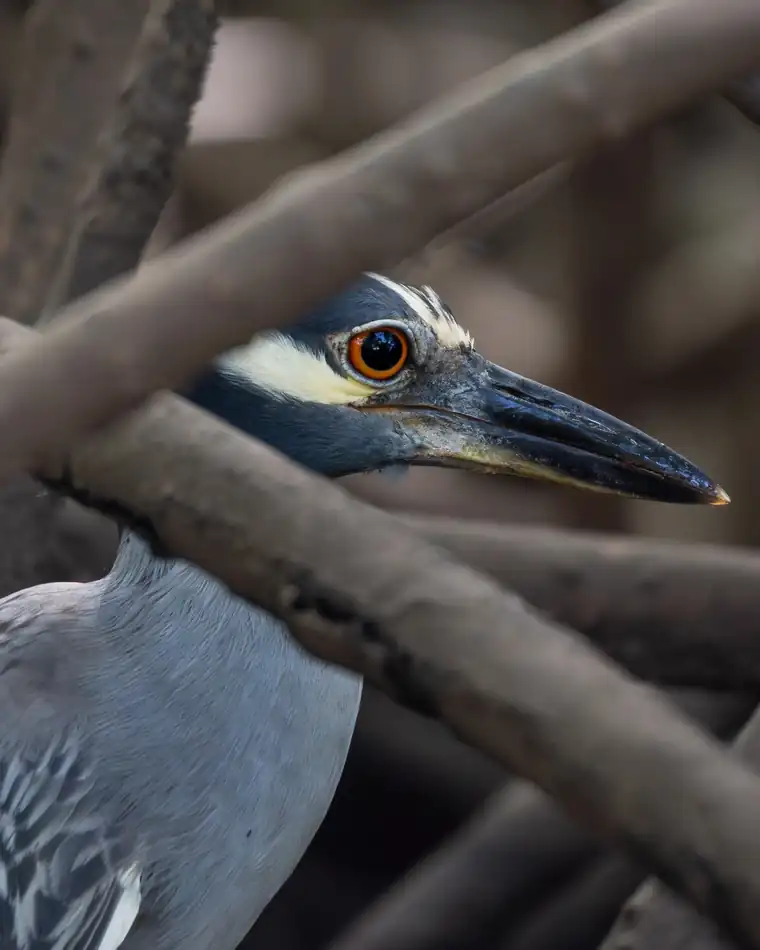
- Herons and other birds: the boat-billed heron, the night heron, white ibises and kingfishers.
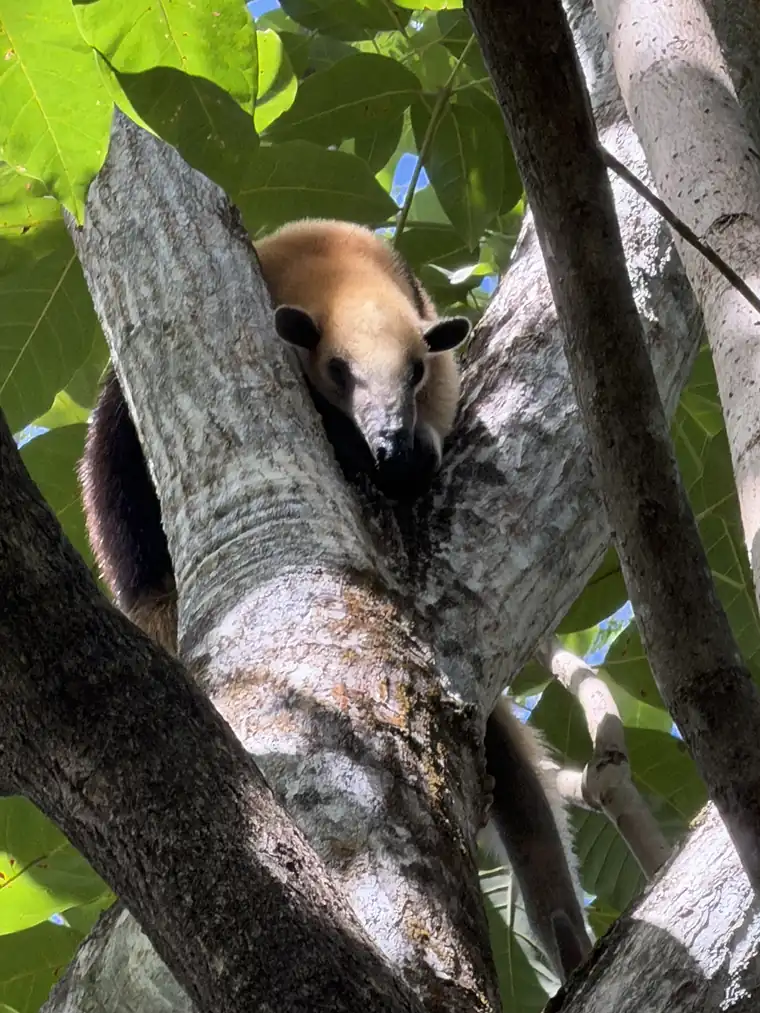
- With luck, a raccoon on a branch or a tamandua, the small tree-climbing anteater.
The estuary boat tour takes about 2 hours, has a roof for shade and works for every age, at $35 per person. The mangrove kayak tour is quieter and slips into narrower channels, at $60 per person. Not sure which one suits you? Read boat or kayak in the Tamarindo Estuary, and see the full list of residents in Tamarindo Estuary wildlife.
A simple plan for wildlife lovers
A combination that works well: one morning or afternoon in the estuary for crocodiles, monkeys and birds, and one full day inland for sloths. If you have one more day, Río Celeste is in the same mountains; read why Río Celeste is so blue before you decide. Leave a beach day between the two long trips if you can, because the hours in the car add up.
Costa Rica’s national weather service, the IMN, publishes forecasts for both the North Pacific and the northern plains, which helps you see how different the two climates are. For protected areas and the rules for watching wildlife, the official reference is SINAC.
Ready to plan? Send us your dates and group size through the booking page, or ask anything on our contact page.
Updated November 10, 2026 · Written with the Conchita Tours guides.
Questions
Can you see sloths in Tamarindo?
Rarely. Tamarindo is surrounded by tropical dry forest, where sloths are scarce and hard to spot. To see them with good odds, go inland to the rainforest around Bijagua, near Tenorio Volcano.
Are there sloths on the Tamarindo Estuary tour?
No. The mangroves are home to crocodiles, howler monkeys, iguanas and many birds, but sloths are not part of what you see on the boat or kayak tour.
How much is the sloth tour from Tamarindo?
$220 per person for 2 or 3 people and $190 per person from 4 people, with round-trip transport, breakfast, lunch and a naturalist guide. Minimum 2 people; card payments have a 13% surcharge.
How long is the drive from Tamarindo to the sloths?
Approximately 2.5 to 3.5 hours each way to Bijagua, depending on traffic and the road. That is why the sloth tour takes a full day.
Is there a best season for the sloth tour?
Sloths live in Bijagua all year and the forest stays green in every season. Rain is possible in any month, so bring a light rain jacket whenever you go.