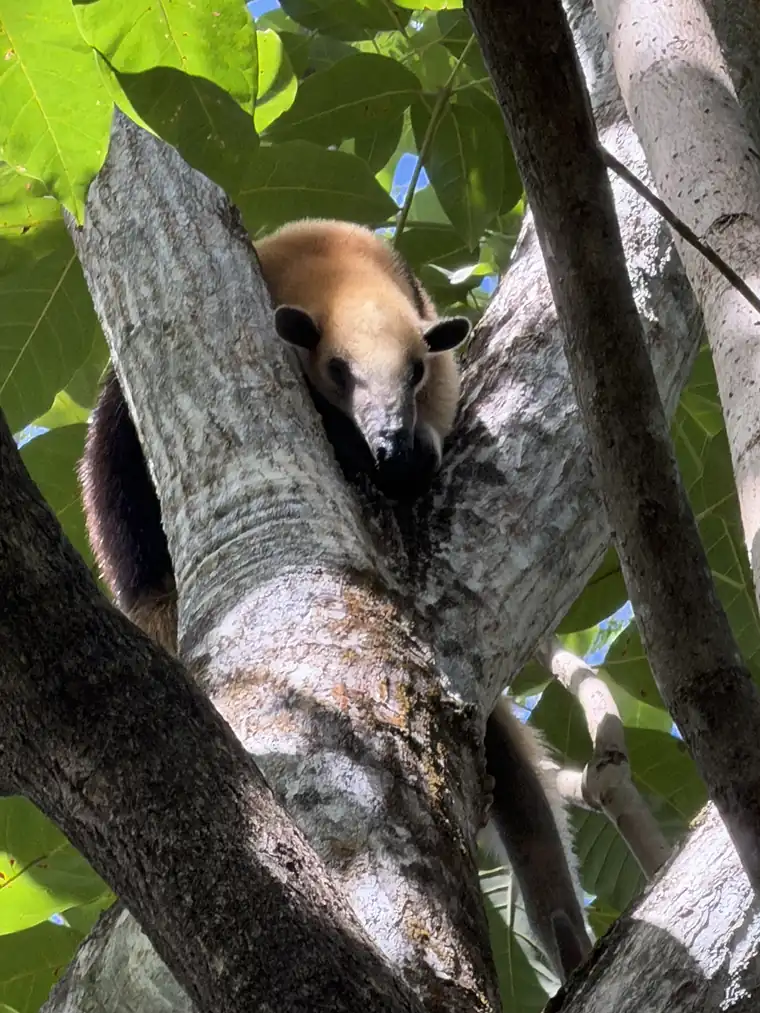
Most visitors expect crocodiles and monkeys in the mangroves. Very few expect an anteater halfway up a tree. Yet every now and then one of our guides cuts the conversation short, points at a trunk and whispers “tamandua”. The photo at the top of this page was taken on one of those days in the Tamarindo Estuary: a northern tamandua climbing a mangrove as if the tree were a ladder.
| The tamandua at a glance | |
|---|---|
| Species | Northern tamandua, Tamandua mexicana |
| Family | Anteaters; its relatives include the giant anteater of South America |
| Size | Roughly half a meter of head and body, plus a tail almost as long; a few kilos in weight |
| Look | Golden or tan fur with a black “vest” over the shoulders and back |
| Diet | Mostly ants and termites |
| Lifestyle | Semi-arboreal and mostly solitary; can be active by day or by night |
| Range | From southern Mexico through Central America into northwestern South America |
Half tree-dweller, half ground-walker
Scientists call the tamandua semi-arboreal: it spends a lot of its time in trees but also walks on the ground between them. Its secret is the tail. It is prehensile, which means it can wrap around a branch and hold the animal’s weight, and the underside and tip are bare, which gives it better grip. Watch one for a few minutes and you will see the tail always anchored somewhere while the front feet reach for the next hold.
Those front feet carry big, curved claws, especially the one on the third finger. To keep them sharp, a tamandua walking on the ground folds its hands and steps on their outer edge, which gives it a slightly clumsy, rolling walk. In the mangrove, where roots and trunks are everywhere, that awkwardness disappears and it moves with surprising confidence.
Built for ants and termites
A tamandua has no teeth. What it has is a long, narrow snout, a tiny mouth and a very long tongue coated in sticky saliva. It finds nests mostly by smell, since its eyesight is poor, then tears an opening with its claws and flicks the tongue in and out to collect the insects.
An interesting detail: it usually feeds for a short time at each nest and moves on before the colony is destroyed. Ants and termites defend themselves with bites and chemicals, so short visits make sense for the anteater too. It also tends to avoid the species with the most painful defenses. Termite nests on mangrove trunks and branches are one of the reasons a tamandua might be in the estuary in the first place.
Yes, it smells
If you ever get downwind of a tamandua, you will know. It has a gland near the base of the tail that produces a strong, musky odor, especially when the animal feels threatened. It is part of its defense and one more reason to give it room.
A loner with a single baby
Adults usually live and move alone. The female has one young at a time, and for a while the baby rides on her back, holding on to her fur, while she climbs and feeds. Seeing a mother with a baby on board is a rare and special moment; if it happens on your tour, it is a reason to keep your voice down and your distance long.
The defensive stance: do not get close
Tamanduas look gentle, and most of the time they simply walk away from people. When one feels cornered, though, it sits back on its hind legs, uses the tail as a third support and opens its arms with the claws out. It may hiss. That pose is not an invitation to a photo: those claws are strong enough to cause serious wounds.
- Never try to touch, pick up or feed a tamandua.
- Do not block its path, on the ground or on a trunk.
- If you find one on a road or in a garden, keep dogs away and let it leave on its own.
Costa Rica’s conservation agency, SINAC, is the official reference on how to behave around wild animals. The species is listed as Least Concern on the IUCN Red List, but locally tamanduas still face roads, dogs and power lines.
Tamanduas in the Tamarindo Estuary
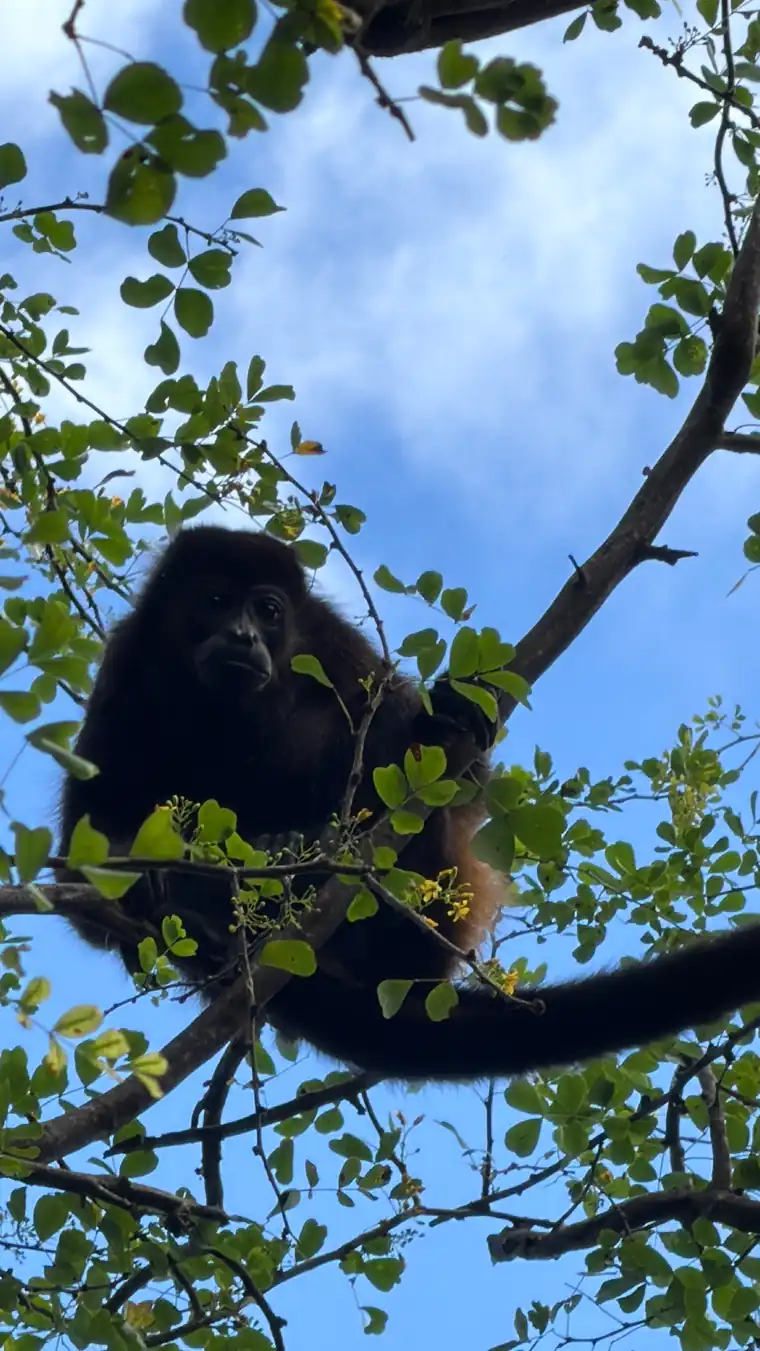
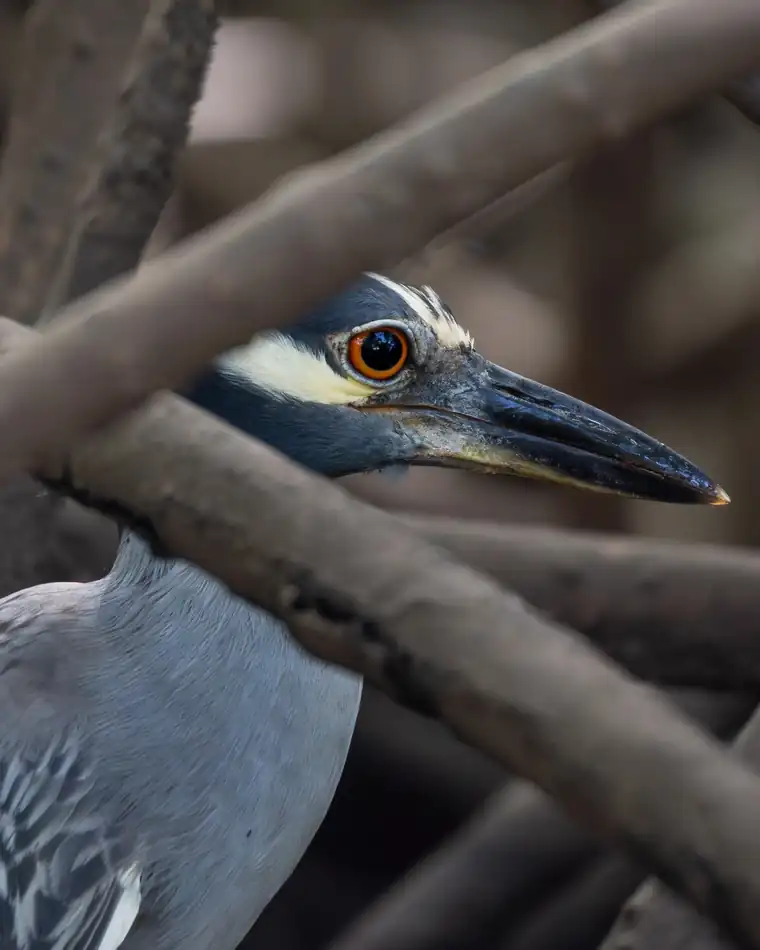
Here is the honest part: a tamandua is a surprise on our tours, not a regular. Our guides have seen them climbing mangroves along the channels, but on most trips you will not see one. Crocodiles, iguanas, herons and howler monkeys are the likely sightings; the tamandua belongs to the list of lucky extras, next to a raccoon on a branch. The full picture of who lives here is in our guide to Tamarindo Estuary wildlife.
How to improve your chances
- Look at trunks and forks, not only at the water. A tamandua is usually pressed against a trunk or curled where branches split. Look for a pale body with a dark band across it.
- Choose silence. The kayak tour slips into narrow channels without engine noise, which helps with shy mammals. The boat tour covers more ground and gives you a higher viewpoint, which helps too.
- Bring binoculars. Many sightings are a shape in the leaves until you see it up close.
- Tell your guide you are interested. Guides know which animals each guest is hoping for, and an extra pair of eyes looking up never hurts.
- Accept the odds. Go for the whole mangrove, and treat a tamandua as a bonus.
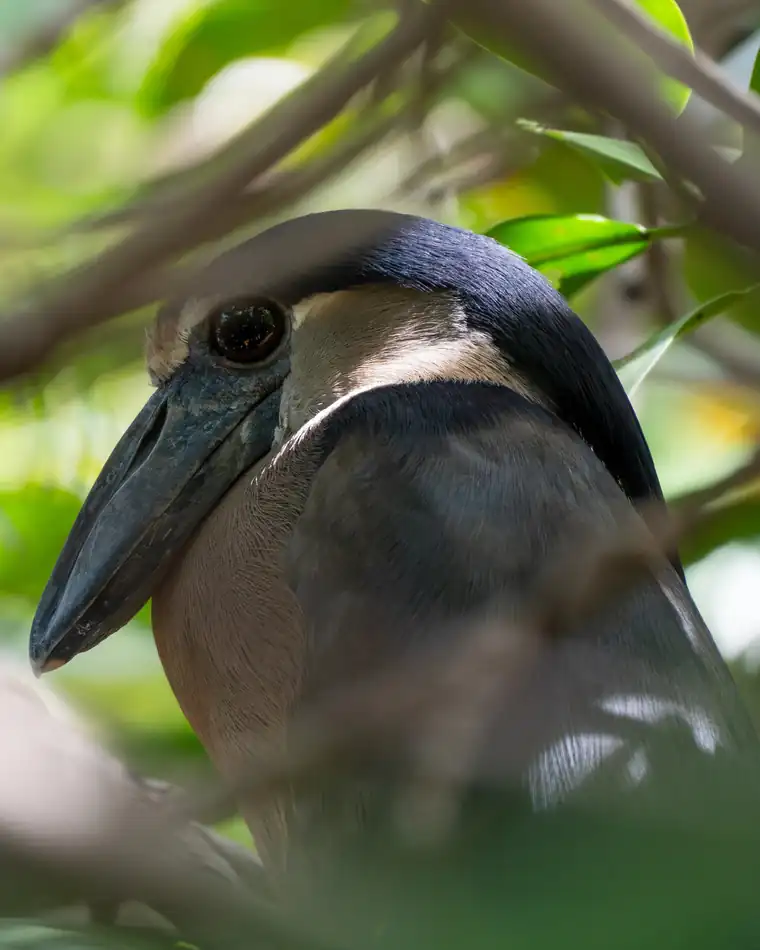
More field tricks are in how to spot more wildlife in Costa Rica. And if the mangrove birds catch your eye too, meet the boat-billed heron and the common black hawk, two regulars of the same trees.
Ready to look for yourself? Book your estuary tour and tell us in the notes that you would love to see a tamandua.
Updated November 10, 2026 · Written with the Conchita Tours guides.
Questions
Are there anteaters in Tamarindo?
Yes. The northern tamandua, a small tree-climbing anteater, lives in the area and our guides have seen it climbing mangroves in the Tamarindo Estuary. It is an occasional sighting, not a regular one.
Is a tamandua dangerous?
Not if you leave it alone. When it feels cornered it rears up and opens its arms with large claws that can cause serious wounds, so never approach, touch or feed one.
What does a tamandua eat?
Mostly ants and termites, which it collects with a long, sticky tongue after opening the nest with its claws. It has no teeth.
Will I see a tamandua on the estuary tour?
Probably not, but it can happen. It is a lucky extra on the boat or kayak tour, while crocodiles, iguanas, herons and howler monkeys are the likely sightings.