If you are staying in Tamarindo and only have room for one wildlife boat ride, the choice usually comes down to two places: the estuary at the edge of town, or Palo Verde, inland on the Tempisque River. We run tours to both, so this is a side-by-side look from people who know the water in each one. The short answer: the estuary is a two-hour outing you can fit around a beach day, and Palo Verde is a full-day trip for travelers who want a long day of birds and big open wetland.
The quick comparison
| Tamarindo Estuary | Palo Verde | |
|---|---|---|
| Type of water | A tidal river mouth lined with mangrove forest, where fresh and salt water mix | The Tempisque River, with seasonal marshes, lagoons and dry forest around it |
| Duration | About 2 hours by boat, 2 to 3 hours by kayak | A full day, counting the drive |
| Price | Boat $35 per person, kayak $60 per person | $160 per person |
| Typical wildlife | American crocodiles, howler monkeys, green iguanas, boat-billed and night herons, green herons, white ibises, kingfishers, common black hawks, mangrove crabs; with luck a raccoon or a tamandua | Crocodiles, monkeys, iguanas and hundreds of bird species, especially waterbirds |
| Distance | Right at the edge of town | An inland drive of roughly 1.5 to 2 hours each way, depending on traffic and the road |
| Best season | All year; the departure time follows the tide | Dry season (about December to April) for the largest gatherings of birds |
| Best for | Families with small kids, short stays, a first wildlife tour, paddlers | Birders, photographers and anyone happy to spend a full day on the road and the river |
Two very different kinds of water
The Tamarindo Estuary is a mangrove world. The tide pushes sea water up the channels and pulls it back out every day, so the scenery changes by the hour: at high water the boat slides deep between walls of roots; at low water the mud banks appear and the crocodiles come out to warm up. The channels are narrow and shady, and everything happens close to the boat.
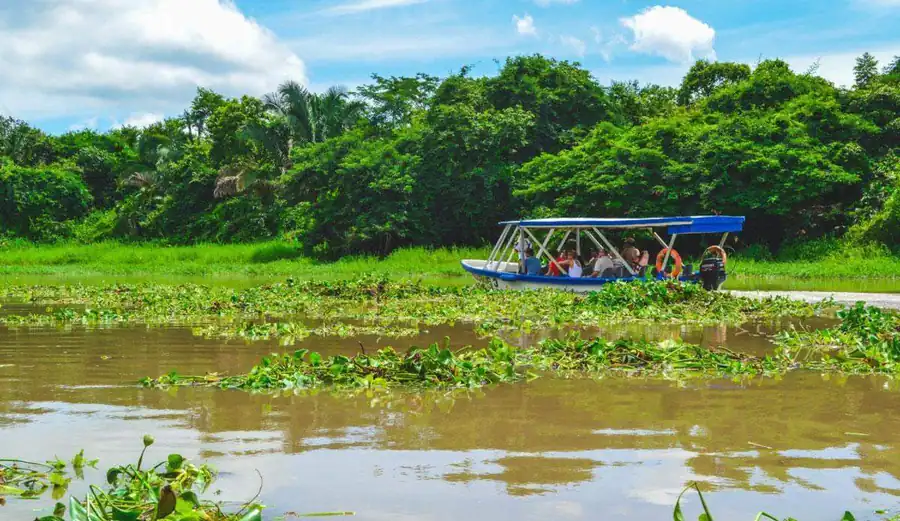
Palo Verde feels like a different country. The Tempisque is one of the main rivers of Guanacaste, and the national park around its lower course protects floodplain marshes, lagoons and limestone hills covered in dry forest. The river is wide, the sky is big and the views stretch across the wetland. The area is recognized as a Ramsar wetland of international importance and is managed by SINAC, Costa Rica's national system of protected areas.
Wildlife: what overlaps and what does not
Both trips can show you crocodiles, monkeys, iguanas and herons, so neither one is a "lesser" version of the other. The difference is in the specialists.
- In the estuary, the stars are the animals that depend on the mangrove itself: the boat-billed heron hiding in the shade, the mangrove crabs climbing the trunks and the common black hawk that hunts them. Read more about the boat-billed heron and the wildlife of the estuary.
- In Palo Verde, the highlight is the number of waterbirds. In the dry season, when the marshes shrink, birds crowd around the remaining water: egrets, storks, ducks and, with luck, the pink roseate spoonbill or the enormous jabiru stork.
In both places the animals are wild. Sightings are likely, never guaranteed, and your guide will always keep a respectful distance.
Time, comfort and budget
The estuary boat tour is the easy one: about two hours, a covered boat, no walking and no paddling, and it suits all ages. If you want something more active in the same mangrove, the kayak tour takes you into narrow channels at water level. Both leave at a time set by the tide, which we confirm by WhatsApp.
The Palo Verde boat tour is a bigger commitment. You start early, spend a good part of the day on the road and on the river, and the inland lowlands can be very hot in the dry months. The price covers the boat tour on the Tempisque River and an expert guide in flora and fauna; if you need transport, ask us when you write. It is a day for people who enjoy being outdoors from morning to afternoon.
When each one shines
The estuary works all year. In the green season the mangrove is at its greenest and the town is quieter; in the dry season the light is clear and the water calm. What matters more than the month is the tide, explained in the best time for the estuary tour.
Palo Verde depends much more on the season. From about December to April the wetland dries out and birds concentrate, which is when birders get the most out of the day. In the rainy months the marshes fill, the landscape turns green and birds spread out over a much larger area, so you see a different side of the park rather than the big gatherings. For the general climate pattern of the North Pacific, the National Meteorological Institute (IMN) publishes regional summaries.
Which one should you choose?
- Pick the estuary boat if you have kids, limited time, or want your first look at crocodiles and mangrove birds without giving up a beach day.
- Pick the kayak if you like being active and want silence and narrow channels. Our guide on boat or kayak helps you decide.
- Pick Palo Verde if birds are a priority, you travel in the dry season and a full day out sounds like fun rather than a chore.
How to combine both in one trip
The two trips work well together. A good order is the estuary first, early in your stay: in two hours you learn to spot a heron in the shade and a crocodile on the mud, and your eyes get trained for what comes next. Then, on a day when you are rested, go to Palo Verde for the full wetland experience. Leave a beach or pool day between them; doing both on the same day is too much.
If you are planning a longer stay, our five-day plan from Tamarindo shows where each tour fits. When you have your dates, book online or send us a message and we help you line up the tide and the trip.
Updated November 10, 2026 · Written with the Conchita Tours guides.
Questions
Is Palo Verde worth it if I already did the Tamarindo estuary tour?
Yes, if you enjoy birds. The estuary is about mangrove species seen up close, while Palo Verde is about a large river and wetland with many more waterbirds, especially in the dry season.
Can I see crocodiles in both places?
Crocodiles live in both the Tamarindo Estuary and the Tempisque River, and they are seen on most trips. They are wild animals, so no sighting is guaranteed.
Which tour is better with small children?
The estuary boat tour. It lasts about two hours, the boat is covered and it suits all ages. Palo Verde is a full day, which is long for small kids.
What is the best time of year for Palo Verde?
The dry season, roughly December to April, when the marshes shrink and birds gather around the water. The tour also runs in the rainy months, with greener scenery and birds more spread out.
How much do the tours cost?
The estuary boat tour is $35 per person, the kayak tour $60 per person and the Palo Verde boat tour $160 per person.